
Venous ulcers
Testimonial: Freddie Chew
Dear Dr. Yow, My wife, Vivian and I would like to express our gratitude and heartfelt thanks to you for an excellent job (ClosureFast Procedure) done on our domestic helper, Minda V. Malapit.
Being someone terrified of going to the doctor, we were glad you were able to allay the fear in Minda with your pleasant demeanor the moment she stepped into your clinic and we were particularly pleased to note your physical exam on her was thorough, your explanation succinct and we could see Minda very much at ease as she could sense your empathy & compassion towards her.
Needless to say, my wife & I were most certain if there is any Vascular Surgeon Minda would feel most assured to take care of her venous reflux with severe varicose ulceration, it has got to be you and you sure lived up to our faith in you.
In Minda’s own words, “Dr. Yow is a superb, a very gentle & caring Vascular Surgeon. He is truly a godsend and I’m so blessed to be treated by him.”
Once again, thank you & kudos to you, Dr. Yow.
5 Star Google Review ★★★★★
Arterial ulcers
Open Bypass Surgery
Atherosclerosis or hardening of arteries in the legs and abdomen gradually causes narrowing and blockage of arteries. This is known as Peripheral Arterial Disease(PAD). Depending on the number of levels of blockages(occlusions) or narrowings(stenosis), this can cause a spectrum of symptoms and signs from pain in the leg muscles on walking(intermittent claudication) to pain/numbness in the feet at night(rest pain) to ulcers and eventually tissue loss (gangrene). The established method to treat limb-threatening PAD (critical limb ischaemia) is to perform open Vascular Surgery.

This involves exposing the healthy arteries by careful open dissection above and below the blockage or segment of blocked leg arteries and stitching or suturing a vein or synthetic (prosthetic) graft to bypass the blockage. This then brings life-giving blood downstream to the blockage, allows healing of the leg ulcer and prevents further tissue loss.
Open bypass surgery is an established technique that has been used to treat arterial blockages throughout the body. The most well-known bypass operation is coronary artery bypass grafting (CABG) for patients with blocked arteries in the heart performed by Cardiac surgeons.
An open Vascular surgeon deals with a huge variety of blocked arterial sites and uses a range bypass graft material (patient vein or synthetic materials such as polyester, PTFE) to achieve limb salvage for a patient with PAD. For example, a blockage in the aorta or iliac arteries of the pelvis may require a cut in the abdomen, an aorto-bifemoral bypass using a Dacron(polyester) graft while a blockage in the arteries below the knee will require dissection in the legs, a femoro-popliteal/femoro-distal/femoro-crural/popliteal-pedal bypass using the patient’s own vein.
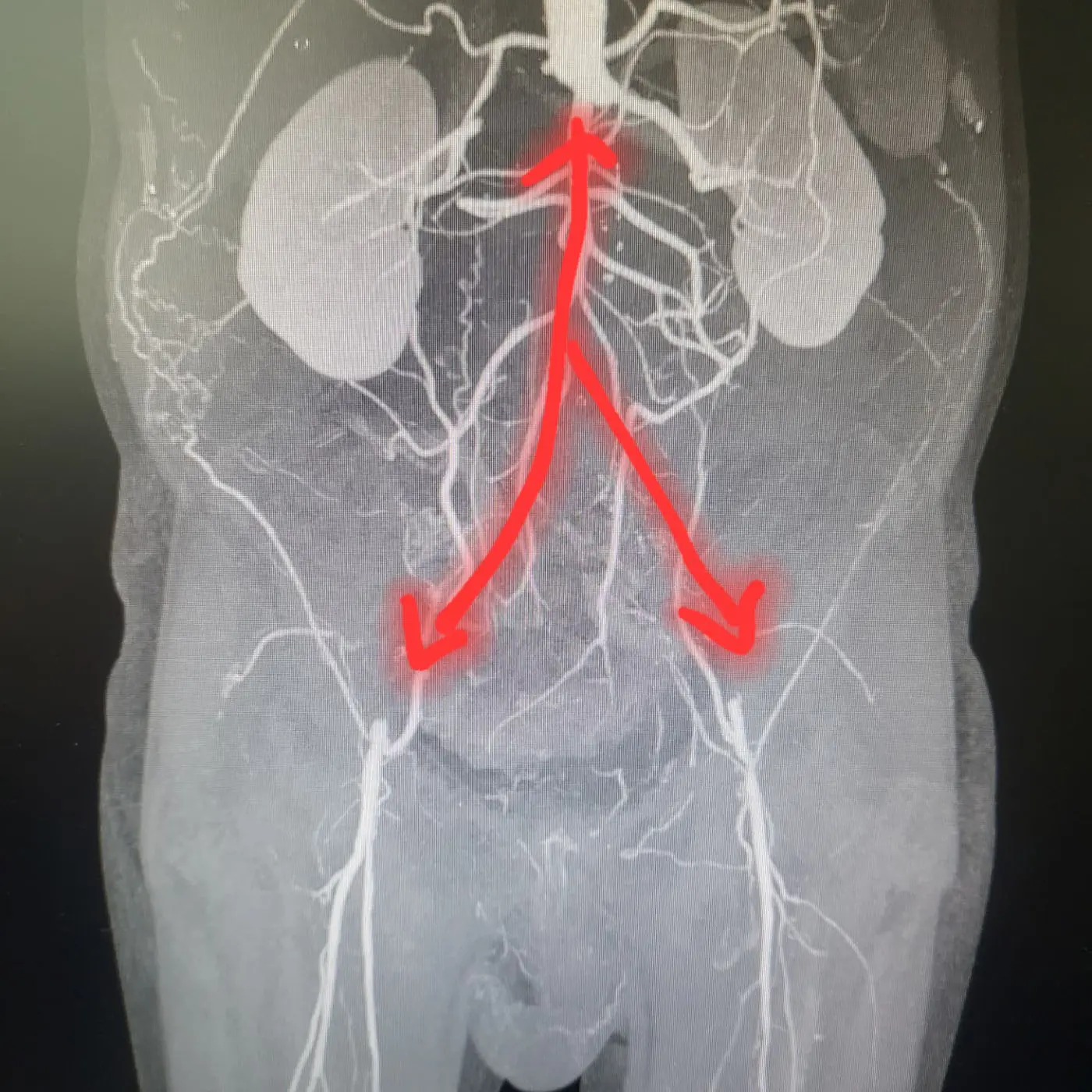
CT angiogram of blocked aorta and iliac(pelvic) arteries.
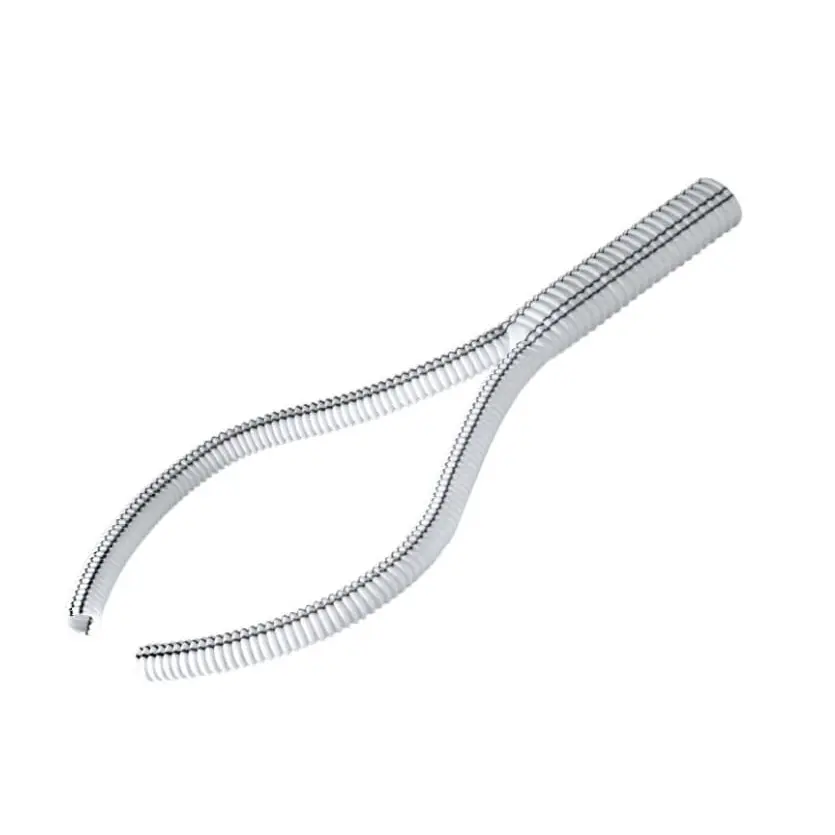
Synthetic Dacron(polyester) Aorto Bifemoral Graft which involves a large abdominal incision to then suture the graft above and below the blocked arteries to bring blood to the oxygen & nutrient-starved legs.
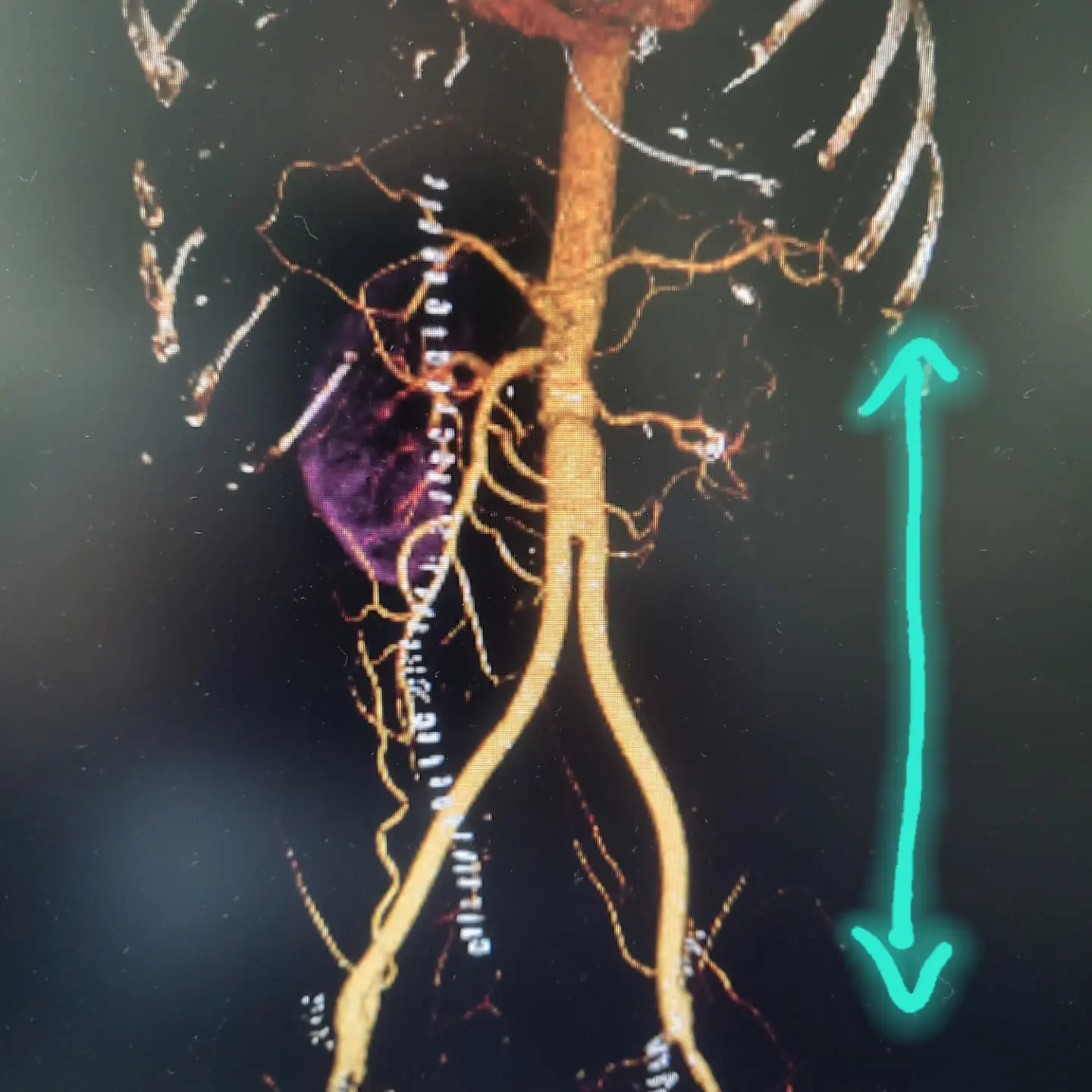
Post-operative CT angiogram after successful aortobifemoral graft by Mr Yow which resulted in bilateral limb salvage in this patient.
In general, synthetic grafts like Dacron or PTFE work best in the abdomen, at or above the groin(supra inguinal) as the arteries here are larger and have a higher flow. For bypasses to arteries below the groin and in particular, below the knee, the international consensus/gold standard is to use the patient’s own vein first unless this is diseased (eg varicose) or removed(previous CABG). This is supported by established randomised controlled trials and international guidelines. The vein most often used is the long saphenous vein(LSV) which runs from your groin to your foot on the inside of the leg. It is long, continuous segment of excellent conduit for a bypass graft. The patient’s own vein is free, more resistant to infection and most importantly, has closer mechanical properties(compliance-matched) to the artery it is being grafted onto. This leads to a much longer life – they stay open longer – than synthetic/prosthetic grafts. However, a bypass operation generally takes longer and is more invasive than endovascular procedures.
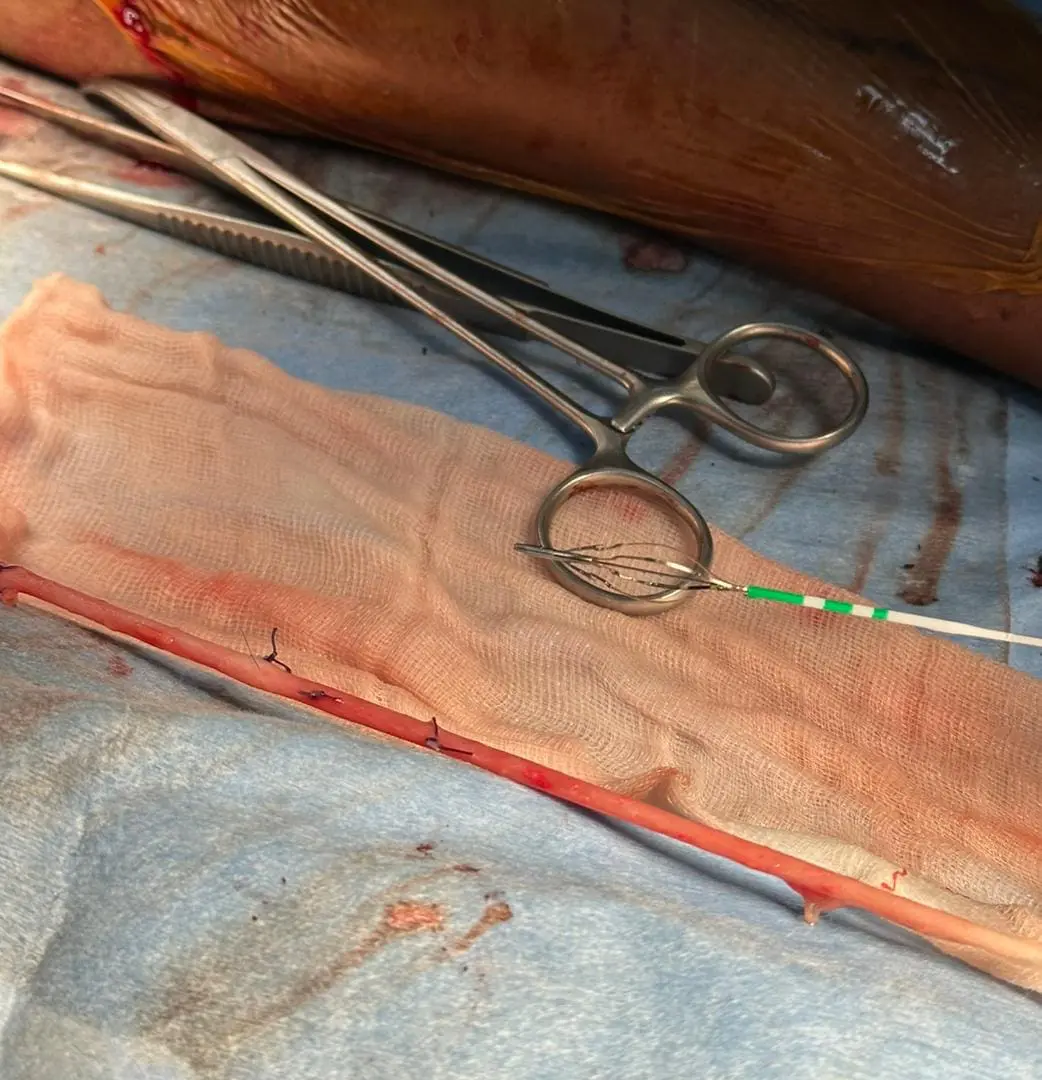
Long saphenous vein harvested for leg bypass by Mr Yow. A valvulotome to break down the venous valves is seen in the foreground
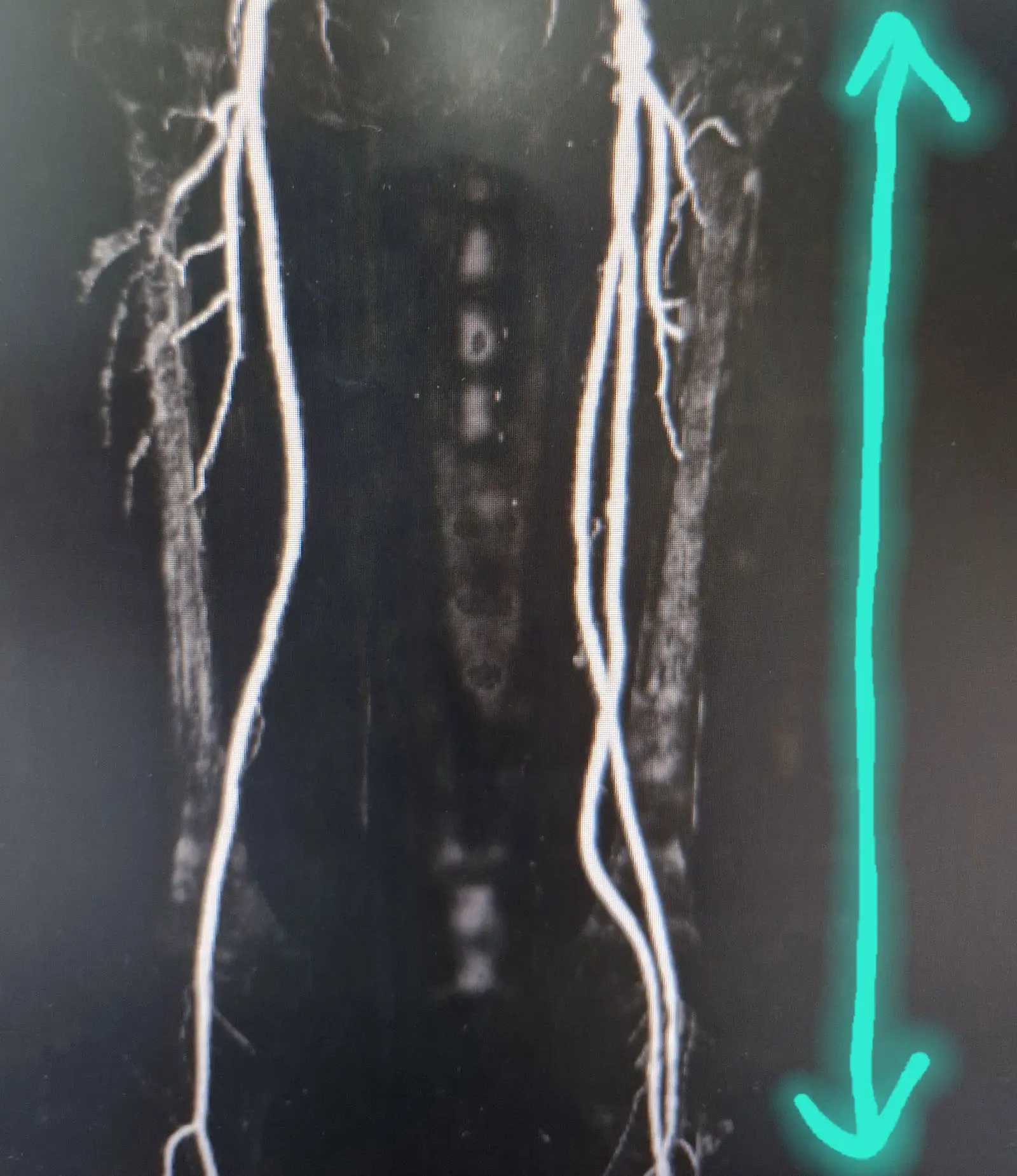
CT angiogram after successful femdistal vein bypass in left leg by Mr Yow & his team.
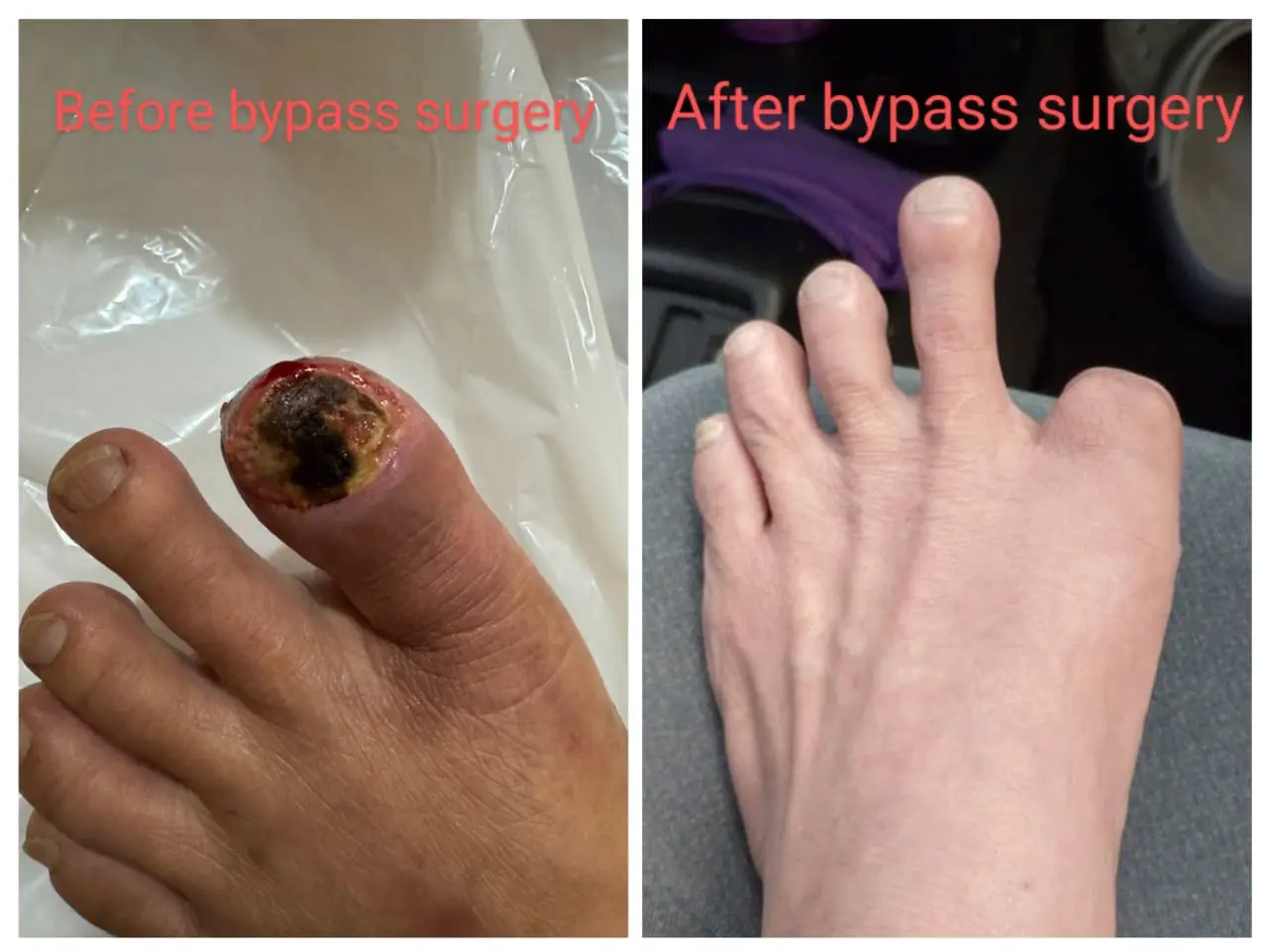
Patient’s left foot with gangrene of the big toe before surgery and after successful vein bypass by Mr Yow showing a pink foot with well healed stump of the big toe.
Having a skilled, experienced and dual-trained Vascular and Endovascular Surgeon who is familiar with a variety of techniques of dealing with diseased arteries will matter to the outcome of your operation. The set of procedures used to bring more blood down to your blood-deprived (ischaemic) legs is called revascularisation. In the modern era, this can be either open bypass surgery or angioplasty with stents or a hybrid/combination of both. This is because he will know which technique is best for your particular level of blockage and appropriate to your level of fitness. Your Vascular & Endovascular Surgeon needs to carefully assess your fitness to determine which type of revascularisation is suitable for you. In addition, he should have the experience, skills and good judgement to be able to deal with any complications that arise. This is to achieve the final goal of saving your legs safely.
One of the advantages of open bypass surgery is it is still far more durable than angioplasty or stents. On average, a well-contructed vein bypass will stay open(patent) for up to 10 years or more while the average patency rate of angioplasty/stents is measured in months to a couple of years.
Endovascular Revascularisation (Angioplasty & Stents)
This involves placing a soft metal guide-wire into the artery via a needle puncture through the skin & into the artery. This is called the Seldinger technique. It is called an endovascular or minimally-invasive(keyhole) procedure as it does not require an open surgical incision to get access into the artery. A plastic sheath is then threaded/railroaded into the artery over the guide-wire. By using a combination of guidewires, sheaths and tubes called catheters, the Endovascular Surgeon is able to introduce balloons and stents into the artery. You may be familiar with this procedure being done in the heart by Cardiologists. Eventually, the guidewire is carefully manouvred across an arterial blockage or narrowing. A balloon is passed over the wire. The balloon is then inflated to crack the hard arterial plaque & push the plaque against the wall. This creates a fresh channel for blood to flow to the oxygen-starved tissues (angioplasty).

Seldinger Technique : Cornerstone of Endovascular Practice. The artery is punctured with a hollow needle. The operator knows the needle has entered the artery by backflow of blood into the needle hub

A guidewire is passed into the artery via the hollow needle. The hollow needle is then removed
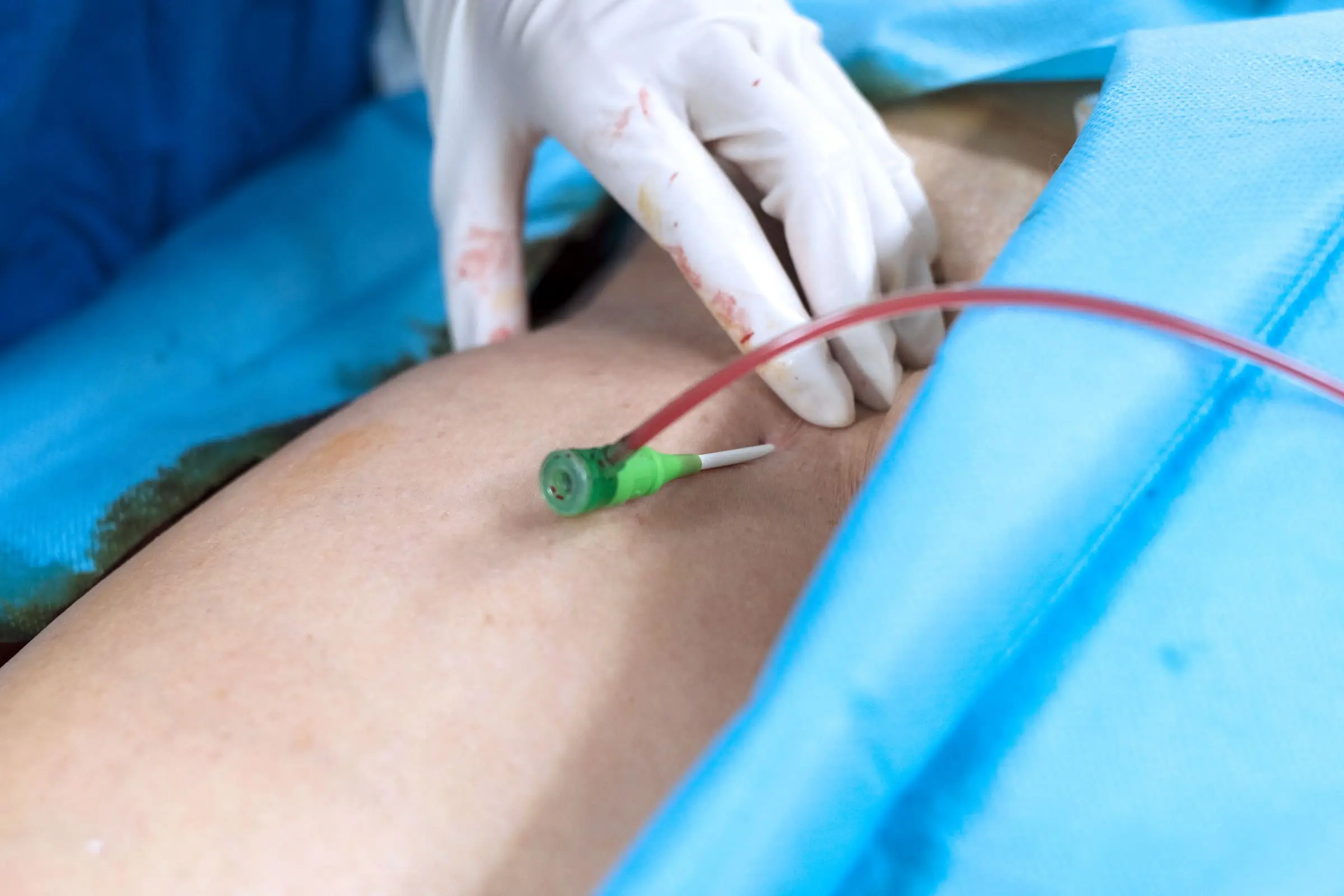
A plastic sheath is passed over the guidewire. Using the sheath as a stable entry point into the artery, a variety of guidewires, catheters and stents can be passed into the artery to perform endovascular procedures such as angioplasty &/or stenting
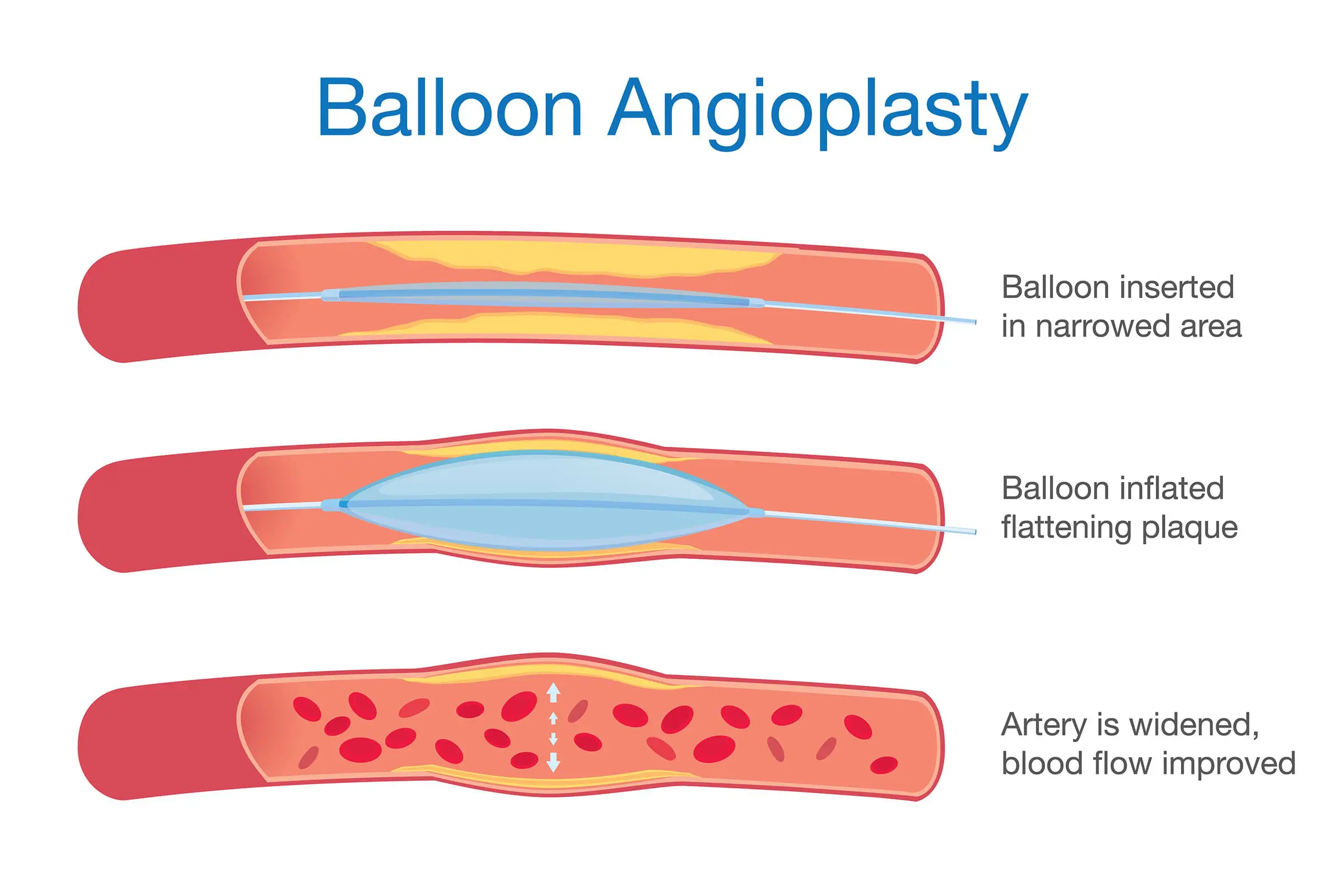
Once the guidewire has crossed the arterial narrowing(stenosis) or blockage(occlusion), the balloon catheter is threaded to the site of stenosis/occlusion.
The balloon is inflated to widen the artery allowing more blood the reach downstream tissues.
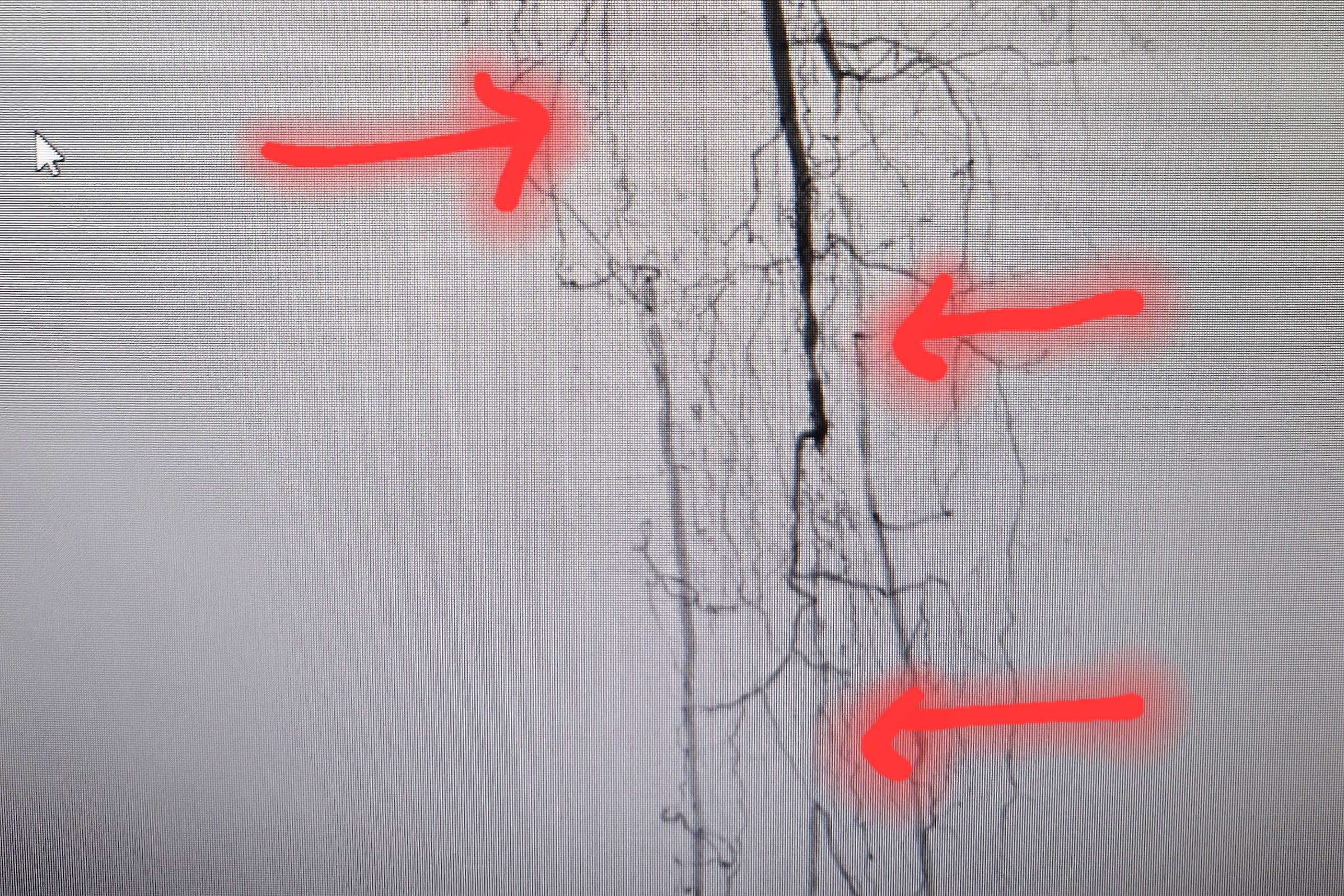
Angiogram of blocked below knee(crural) arteries
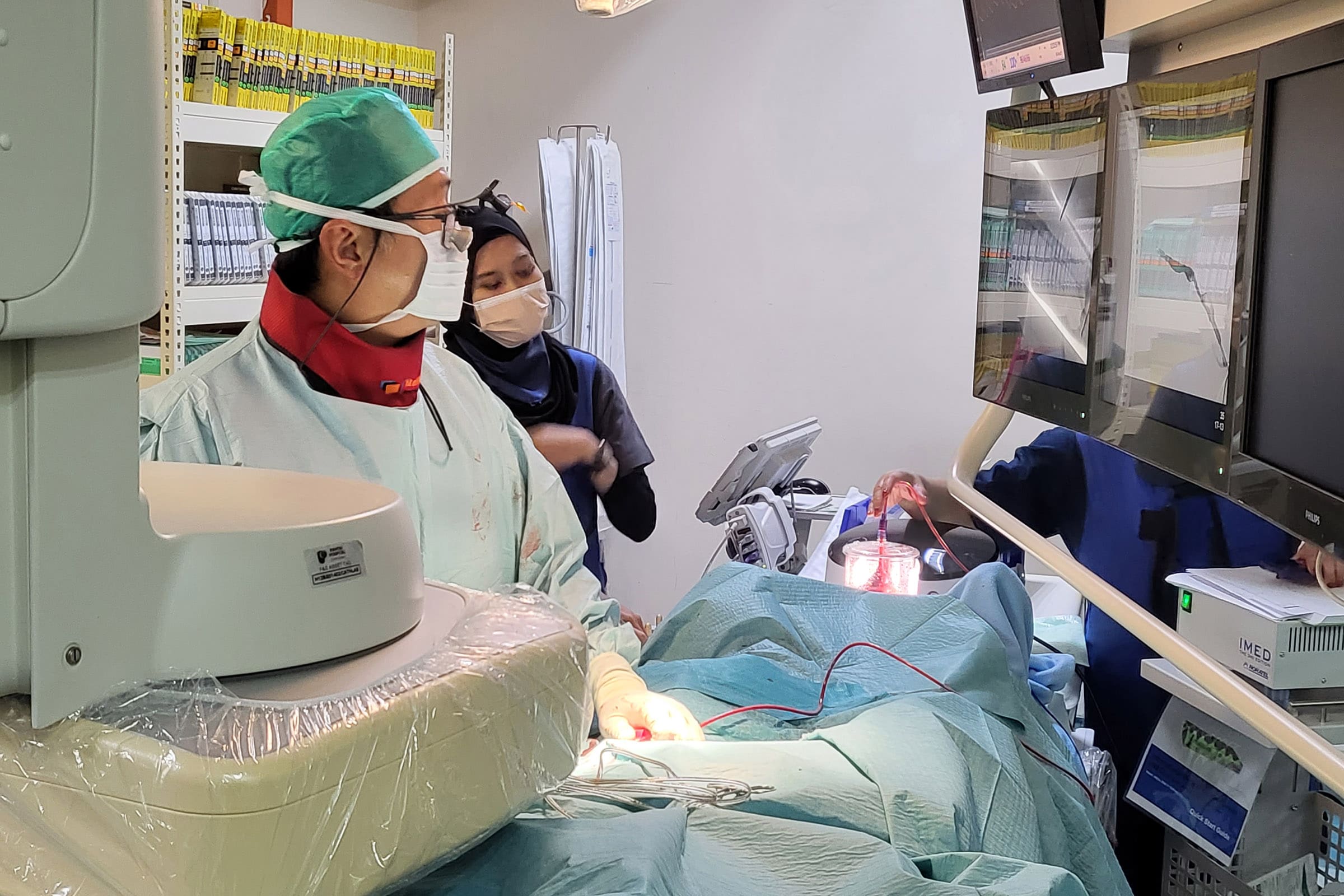
Mr Yow & team performing angioplasty in Catheter Lab
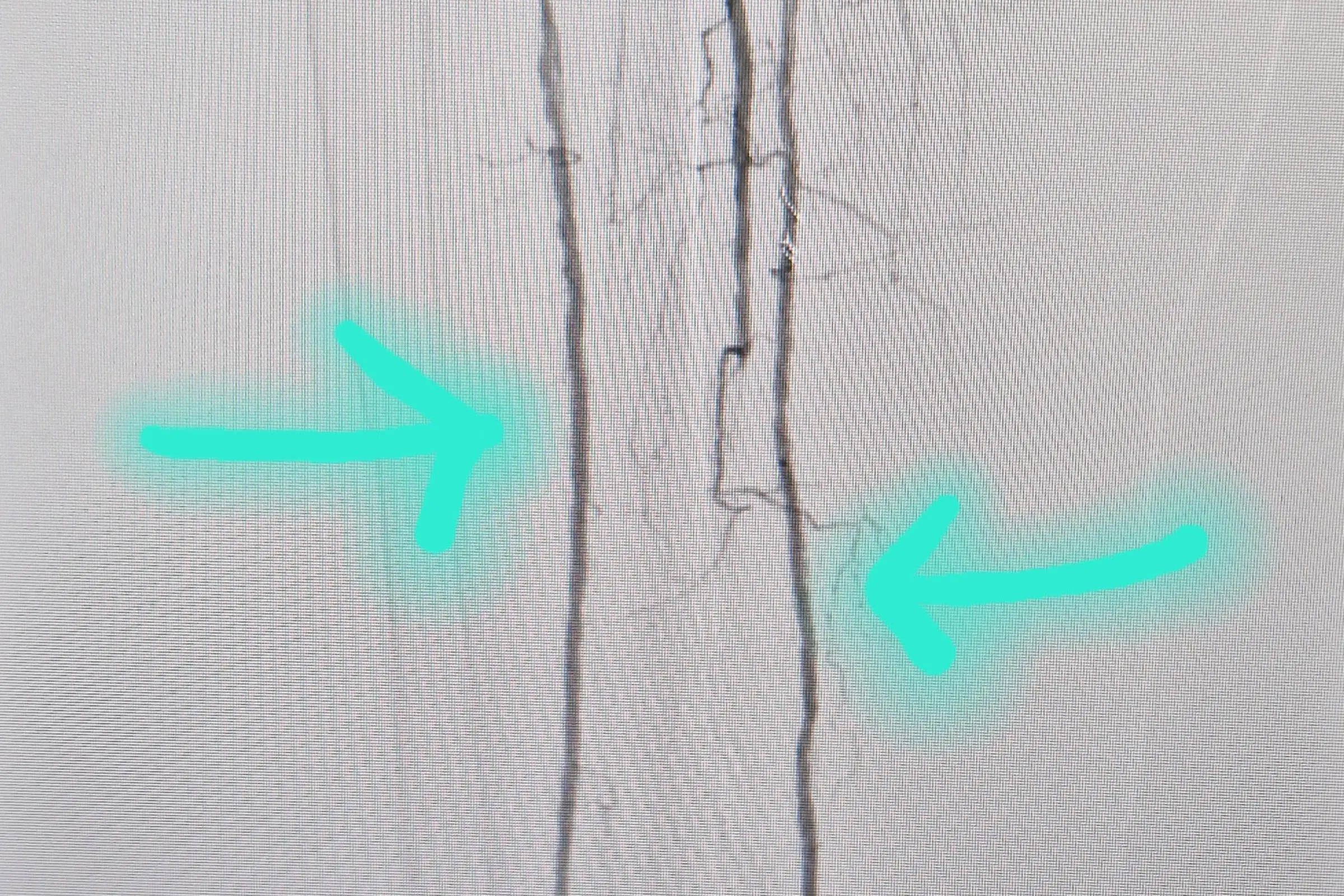
Angiogram of previously blocked arteries now opened with angioplasty by Mr Yow & his team
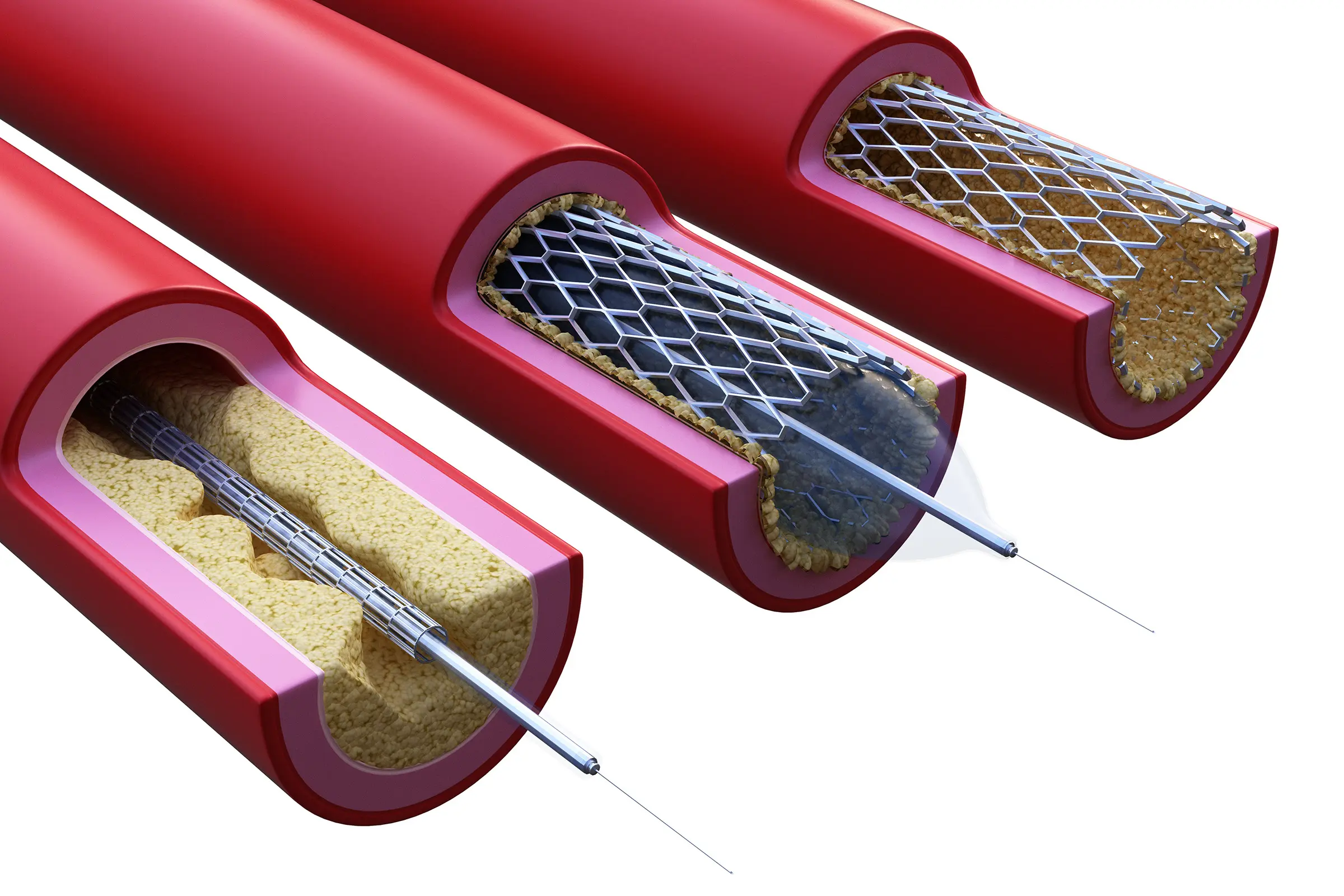
Insertion of a balloon-mounted stent to prop open stubborn calcified or dissected plaques
If the plaque is too stubborn or resistant, the endovascular surgeon will place a metal stent across it to prop it open. This is analogous to load-bearing beams and pillars used to keep a tunnel open.
Sometimes during angioplasty, ruptured atherosclerotic plaque can lift like broken tiles on a floor. This complication is called arterial dissection. The oncoming blood flow can lift the flap further causing a worsening blockage.
In these situations, stents are used to treat dissection flaps.
One advantage of endovascular methods is that it is less invasive and places less overall stress on the patient. It can thus be used for elderly or frail patients to help ulcer healing.
Hybrid techniques (Combined open and endovascular methods)
Hybrid techniques are an attempt to offer the best of both open surgery and endovascular methods to patients. This is the longer life-span or durability of open Vascular Surgery and less physiological stress associated with endovascular methods.
One good example is when a patient has a blockage of his or her iliac(pelvic) and femoral arteries. In previous years, revascularisation would have involved a surgical incision in the abdomen and groin to perform an open surgical bypass from the lower abdomen to the groin. This can now be achieved with a femoral endarterectomy (open removal of plaque from the femoral artery) and angioplasty and stent of the iliac artery. The latter only needs a small cut in the groin. Such a procedure has shown good medium-term durability with less blood loss and shorter hospital admission.
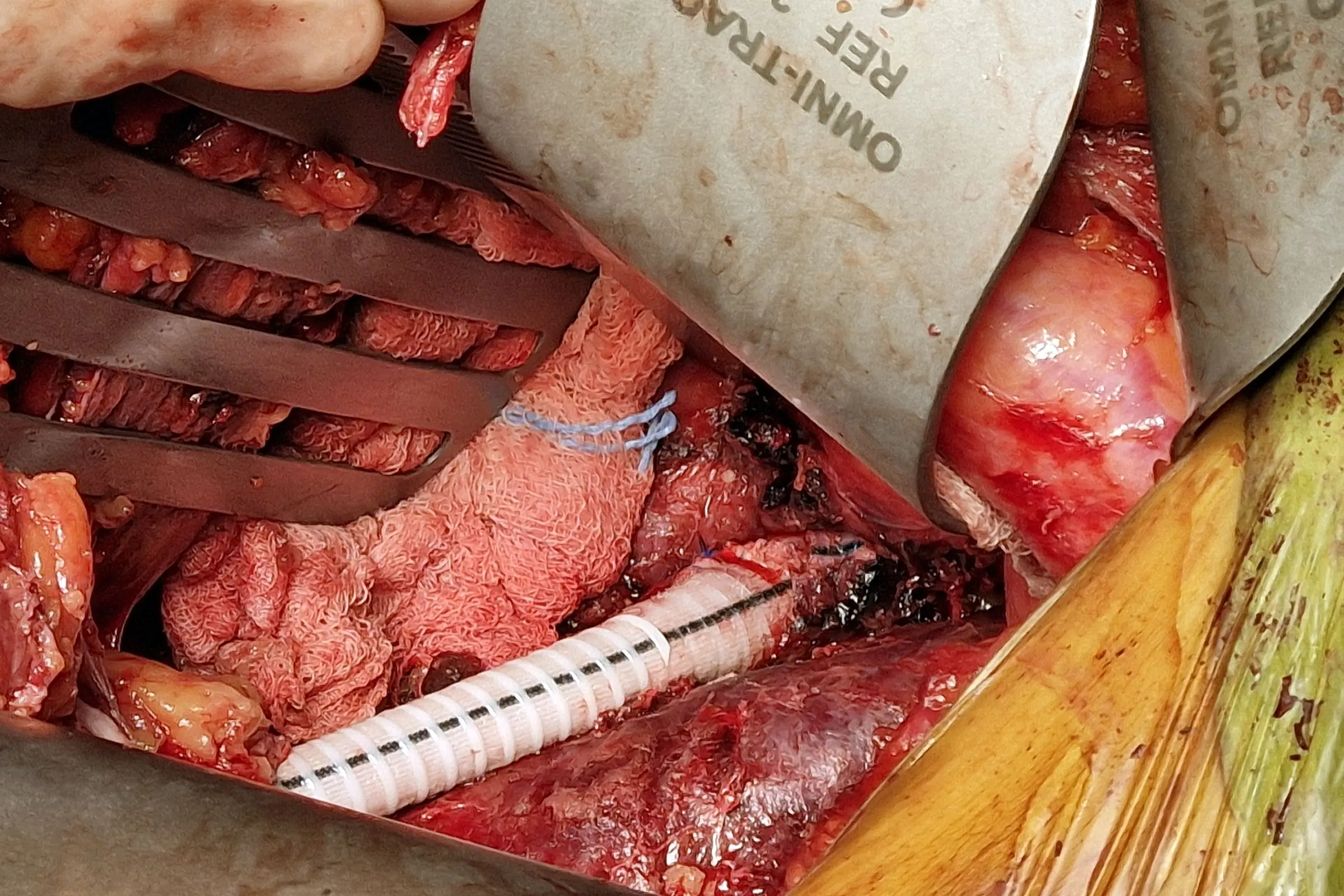
Open Iliofemoral Bypass Surgery : Requires a large incision in abdomen.
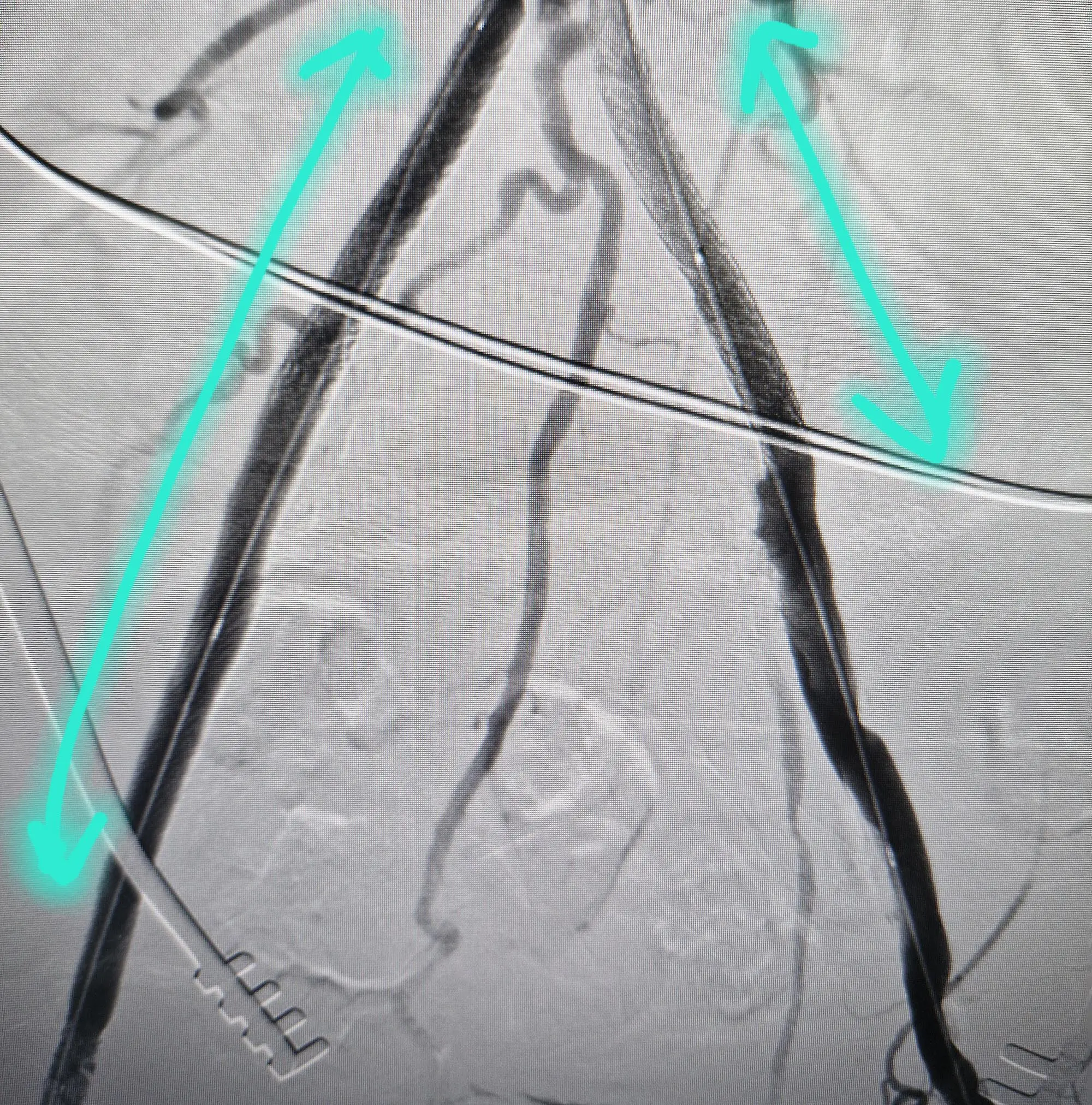
Hybrid Vascular Surgery : Completion angiogram of bilateral iliac stents and angioplasty

Hybrid Vascular Surgery : The iliac stenting was combined with open bilateral femoral endarterectomy to achieve good blood flow to both legs and limb salvage
|
|
Hybrid Surgery |
Open Surgery |
|
Peri-operative Heart Attacks |
1.9% |
5.7% |
|
Kidney Complications |
2.1% |
6.7% |
|
Length of Stay |
4.7 days |
6.1 days |
|
No. of cases |
456 |
2665 |
Findings: Although Hybrid Vascular Surgery had a lower complication rate & shorter hospital stay than pure open surgery (p < 0.005), both types of treatment were equally effective at preventing amputation at 1 year (1-year Amputation Free Survival).
Hybrid Surgery: Femoral endarterectomy* + lower limb Angioplasty/stent
Open Surgery: Femoral endarterectomy* + lower limb Bypass
*Open surgery to clean out/remove obstructing atherosclerotic plaque in the artery.
Adapted from Fereydooni et al, J Vascular Surgery; Sept 2020
When considering a Vascular doctor for your leg revascularisation, it is useful to choose someone who understands you as a complete patient and is dual-trained in Vascular and Endovascular Surgery. This is because he will have the widest possible set of skills to deal with your complex problem and is objective about which methods are most suitable to achieve a successful outcome. It is important to see a specialist doctor who is skilled in assessing your ulcer, investigating its cause and offering a treatment plan that is tailored to your needs and medical conditions. Please note that all information in this website is meant for educational purposes only and not intended as medical advice. Please see an experienced & qualified Vascular surgeon who will assess you in person and provide the necessary advice.
Diabetic ulcers
The type of treatment will depend on the type of ulcer. Some patients will have ulcers caused purely due to the damage of diabetes on arteries resulting in atherosclerotic blockages. Do not forget that diabetes is a risk factor for atherosclerosis. In such patients, the treatment would be to revascularise the leg (see above). In patients with a mixed pressure and arterial ulcer(neuro-ischaemic ulcer), the principle is to revascularise the leg and then to take pressure off the ulcerated area with specially designed footwear. In patients with pure pressure/neuropathic ulcers, the strategy is to offload the pressure are with above footwear. The person usually taking the lead is again the Vascular Surgeon as no ulcer will heal without an adequate blood supply even if the pressure is relieved.
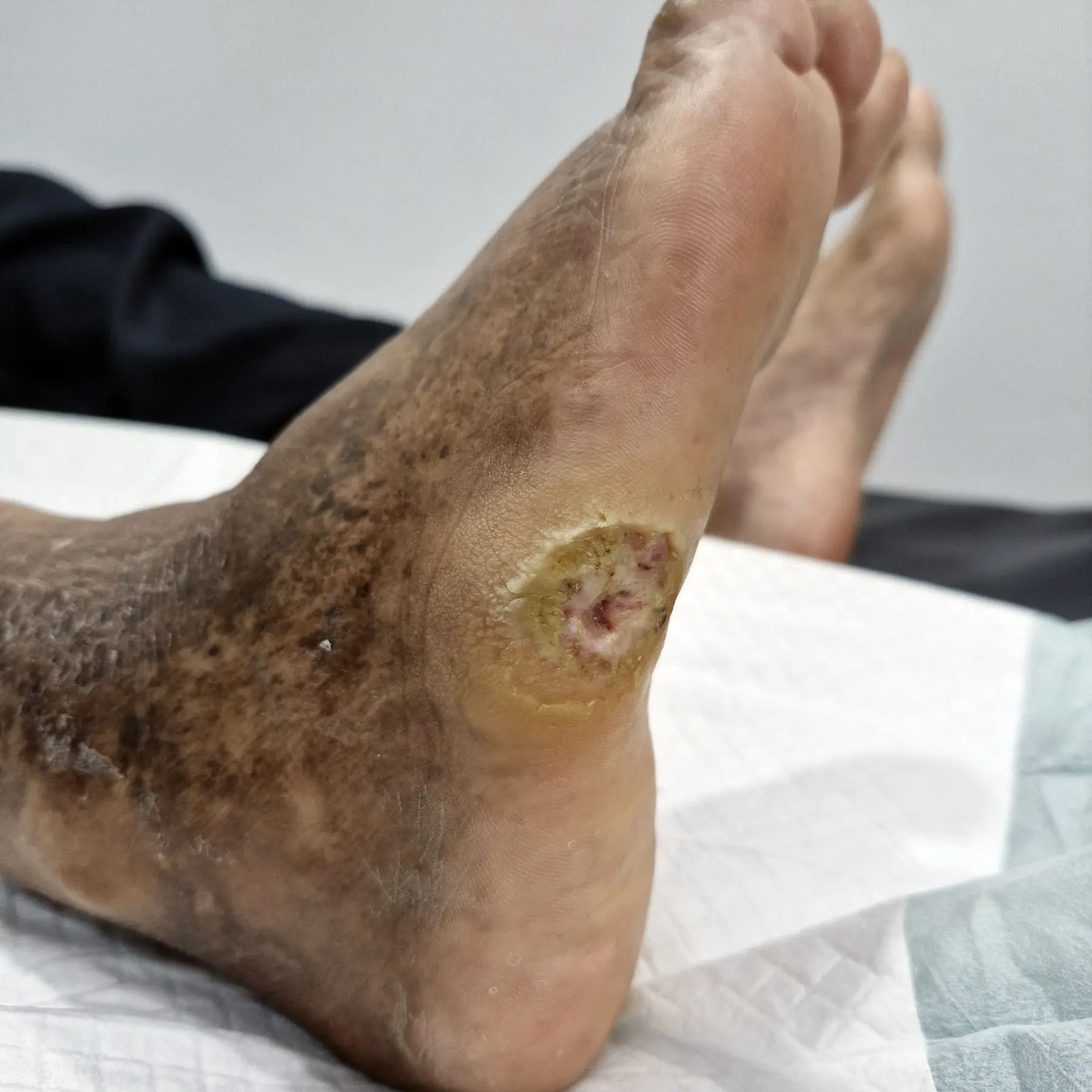
Classic Diabetic Foot Ulcer(DFU) in an exposed & pressure-prone site on outside of foot.
As such, the first priority is to either bypass or angioplasty the blockage if one is found with imaging (ultrasound Doppler, CT or MR angiogram). Simultaneously, it is important to tackle any infection in the ulcer with a combination of correct antibiotics, careful cleaning and dressing of the ulcer. This may involve surgical debridement (surgical removal of dead or infected tissue). The next priority is then to take the pressure of the site of the ulcer. This can be achieved with the use of special boots or casts custom-fitted to the patient. This area involves podiatrists and specialist Foot surgeons.
Joint-saving or Joint Sparing surgery : The Role of the Vascular Surgeon
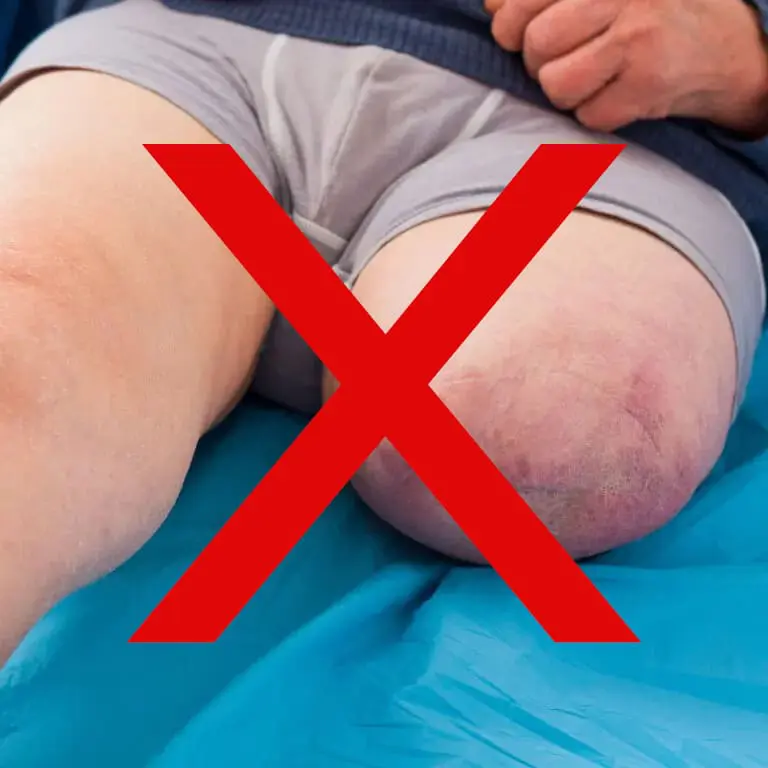
We should always strive to avoid above knee amputations : The knee joint is IMPORTANT!
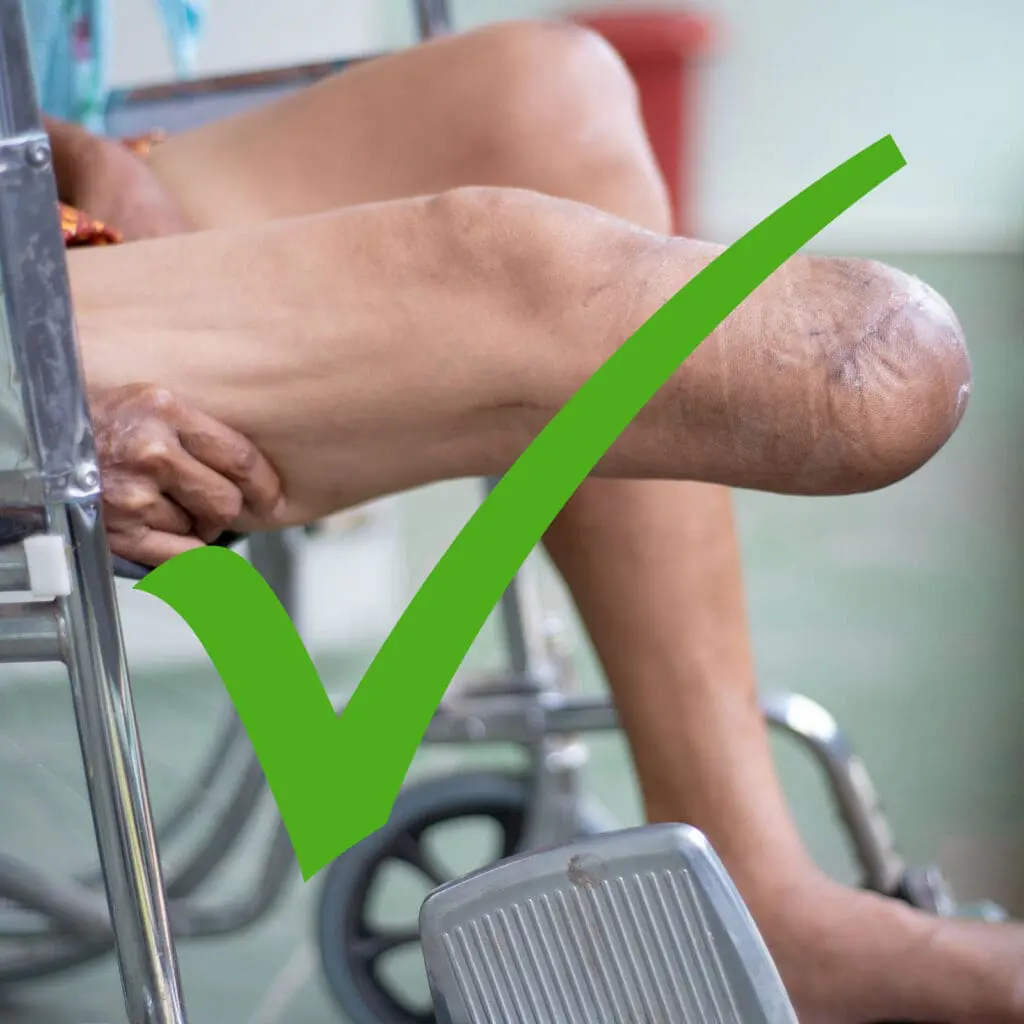
Keeping your knee joint makes it easier to use an artificial leg, transfer and saves you energy.
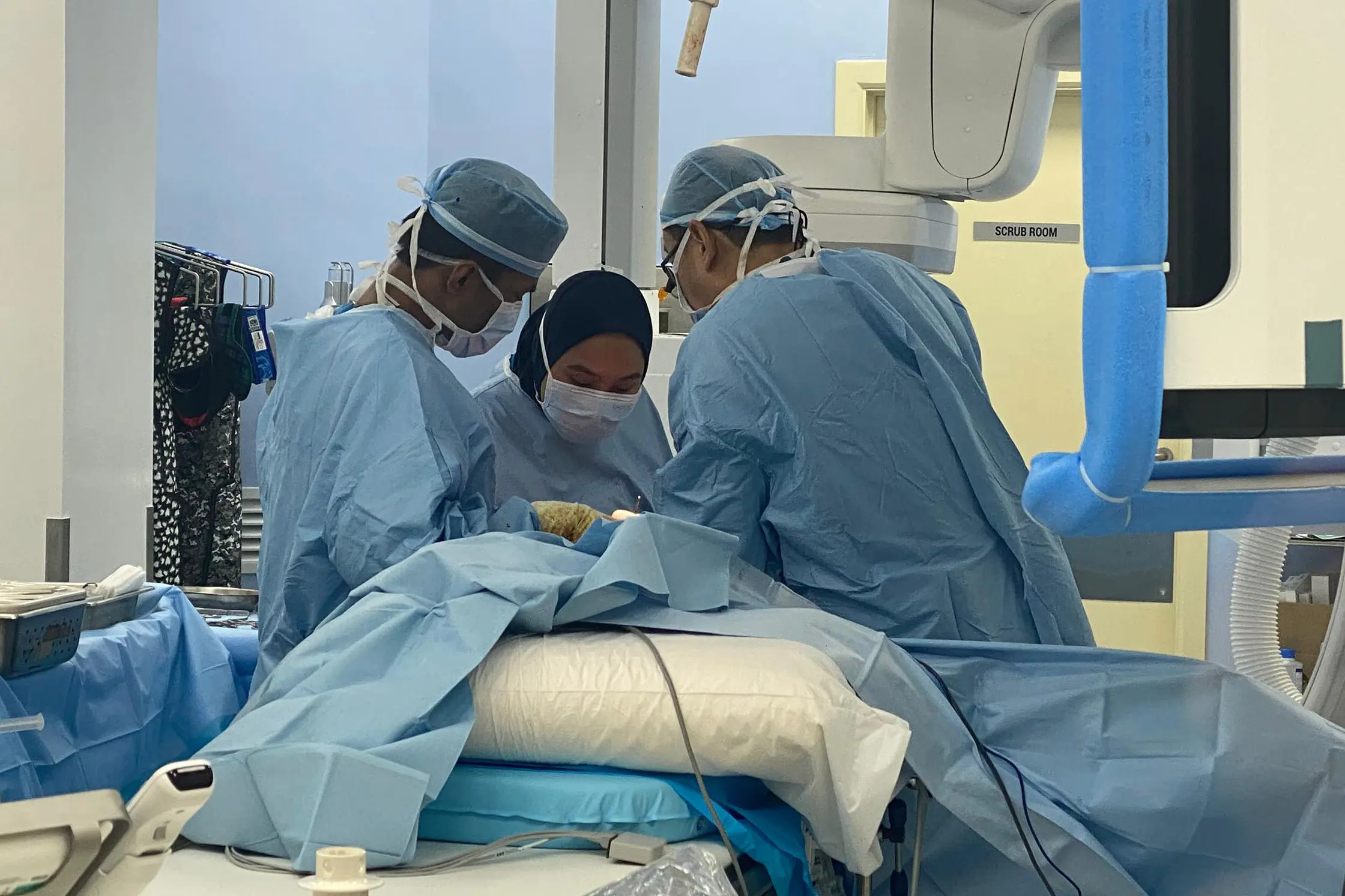
Mr Yow, Vascular & Endovascular Surgeon has lots of experience saving legs and preventing high amputations
In some situations, when tissue damage or loss due to gangrene and infection means that a part of the leg is not salvageable, there is a role for revascularisation to limit tissue loss and prevent an unnecessarily high level of amputation. For example, if a significant part of the foot is destroyed from gangrene, an assessment by the supervising Vascular Surgeon and his team can determine if it is possible to get more blood down the limb by performing a revascularisation procedure (endovascular/hybrid procedure/open surgery) before a major limb amputation.
This might allow a below knee amputation(BKA) to be performed instead of an above knee amputation(AKA), thus saving the knee joint. This is because any improvement in the blood supply to the leg will help with healing of the stump. Saving the knee joint has important implications for the patient’s rehabilitation.
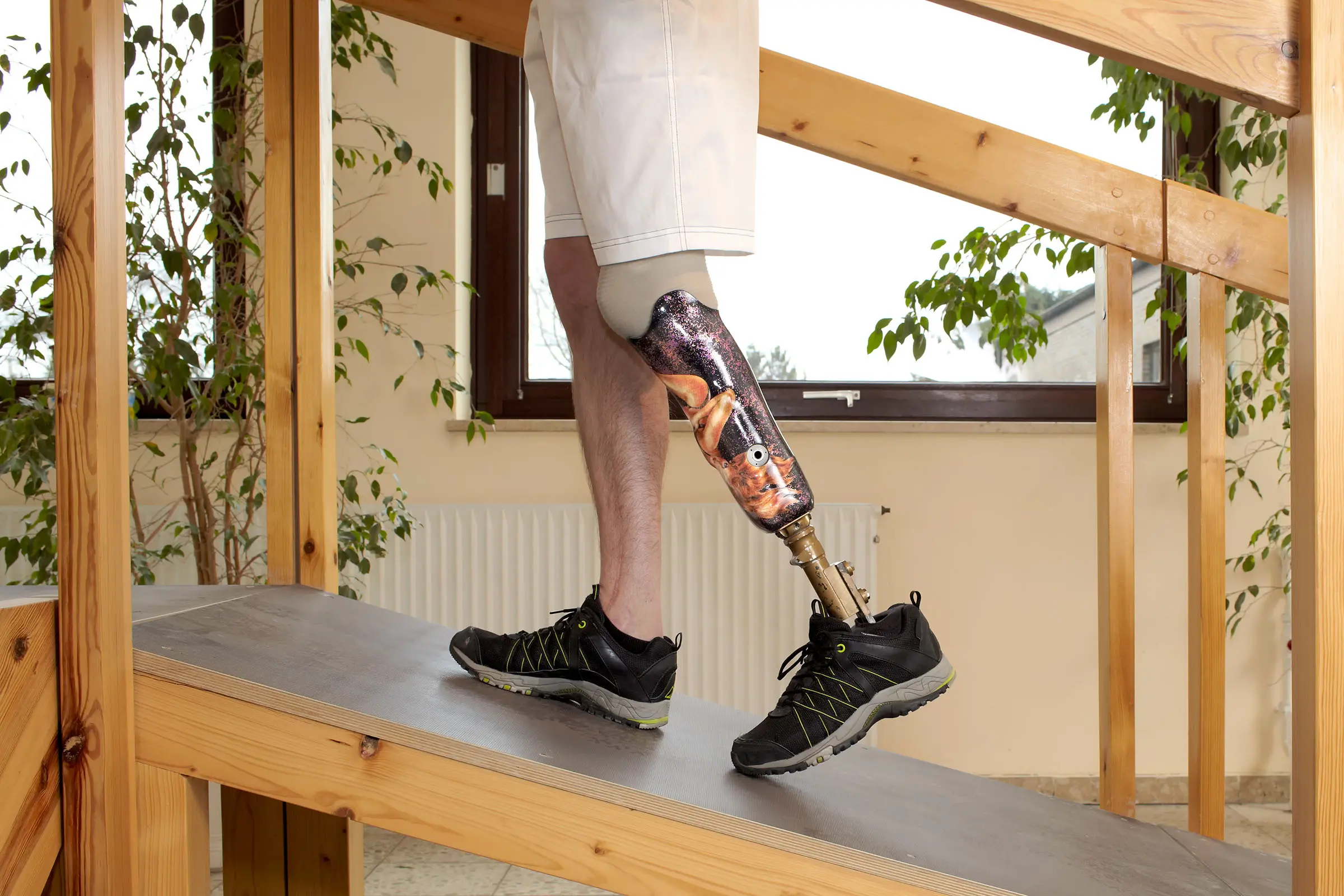
Experienced Vascular & Endovascular Surgeons, like Mr Yow can save your knee joint to get you walking again on a prosthetic leg
Amputees who keep their knee joint save a lot more energy in their daily movements compared to above knee amputees. Research has shown that below knee amputees require much less energy when walking with their artificial legs than above knee amputees.
Patients with AKAs also walk more slowly than patients with BKAs. In addition, patients with BKAs are able to transfer more easily from bed to chair or vice versa.
As such, it is important that a Vascular and Endovascular Surgeon is involved in the care of a patient with foot/leg gangrene at an early stage as the Vascular Surgeon may be able to perform a revascularisation procedure to save the knee joint or ensure a lower level of amputation.
Please note that all information in this website is meant for educational purposes only and not intended as medical advice. Please see a qualified Vascular surgeon who will assess you in person and provide the necessary advice.