
IF YOU HAVE A LEG ULCER OR BLACK TOES (GANGRENE), YOU MUST SEE A VASCULAR SURGEON IMMEDIATELY
What is gangrene?
Gangrene is the death of tissue due to inadequate blood supply to the tissues. This can be caused by blockage in the arteries above/upstream to the tissues or uncontrolled infection. For example, if you have several narrowings(stenoses) or blockages(occlusions) in the arteries in your thigh and legs, you will develop arterial ulcers and gangrene in your toes and feet.
Gangrene is the end result of loss of blood supply to the tissues. The tissues become starved of vital oxygen, nutrients and healing blood cells, leading to cell and tissue death. It can also occur in uncontrolled infection, particularly in diabetics where a small, unnoticed cut or abrasion becomes infected due to a diabetics poor ability to fight infection.
Diabetics often have atherosclerotic arteries and blockages as well which worsens the situation. Propagating bacteria creates pus and damages tissues through the inflammatory process. This infective process will block off small blood vessels (micro-thrombosis) resulting in more tissue death and gangrene.

Dry gangrene of big toe
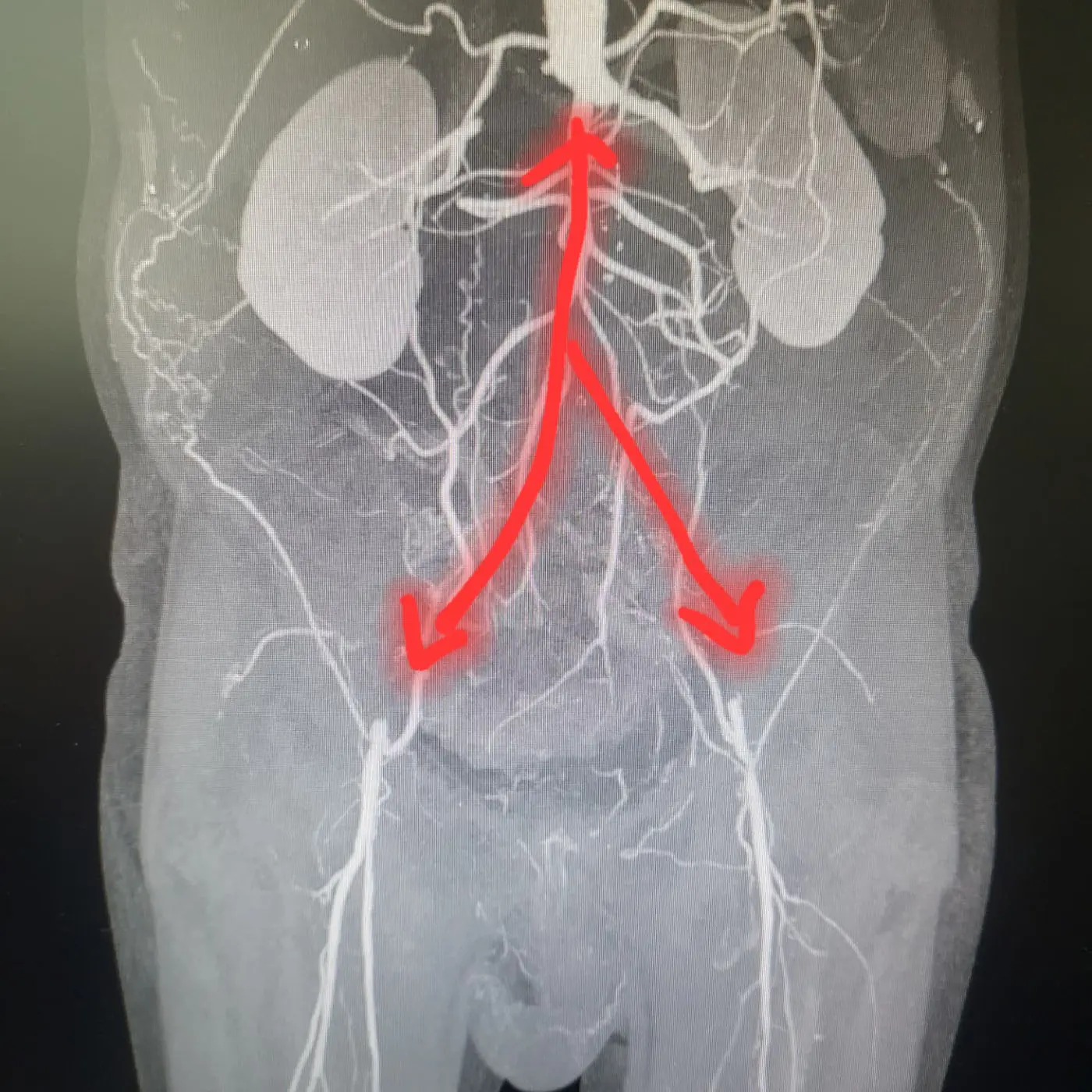
CT angiogram showing blocked aortic and both iliac (pelvic) arteries. The patient had toe gangrene and bilateral leg numbness
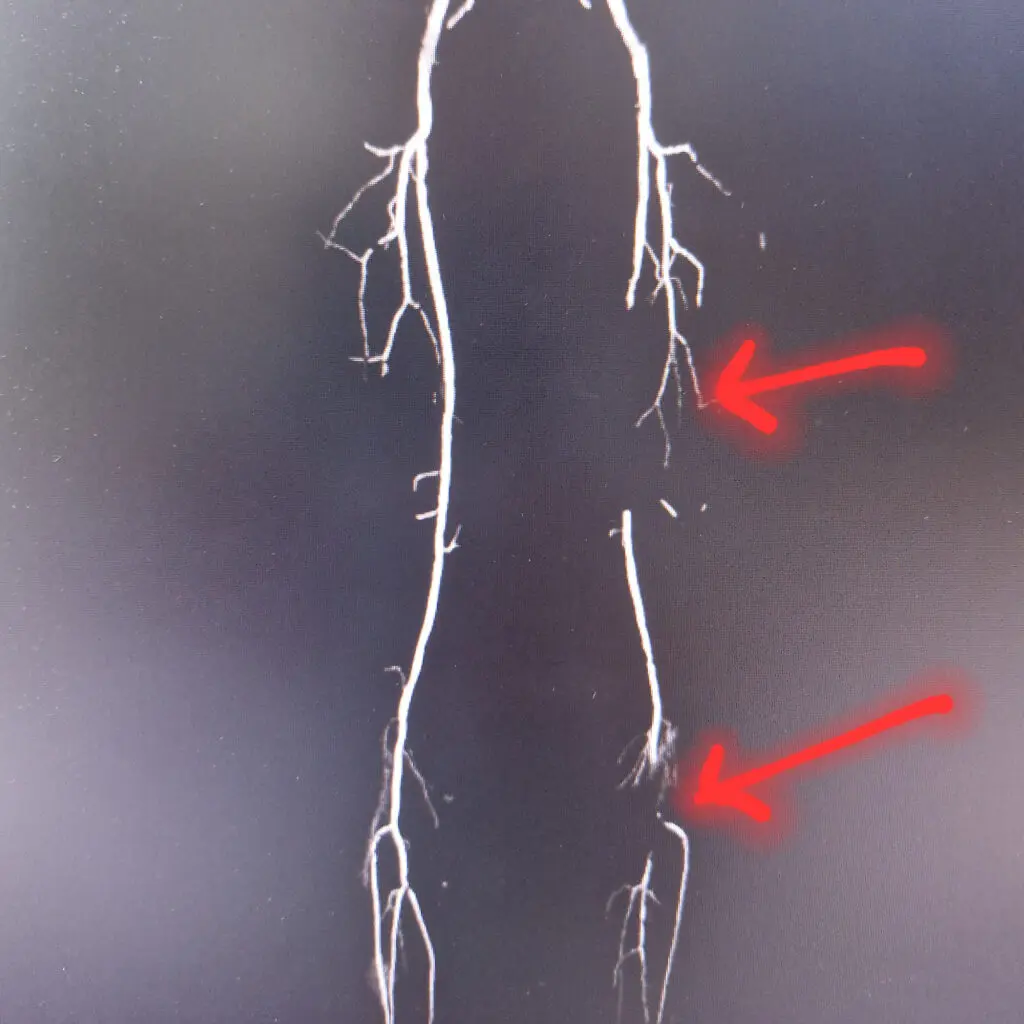
CT angiogram showing blocked superficial femoral artery (thigh) and crural (below knee arteries. The patient had numbness and gangrene in the right leg
Dry vs wet gangrene
Arterial gangrene often starts off dry. The gangrenous tissue appear black and mummified. However, once infection sets in, this can turn to wet gangrene. Diabetics are prone to wet gangrene. Without Vascular intervention, the patient is at very high risk of limb loss or amputation. Patients with wet gangrene at at high risk of death from sepsis as the infection can rapidly spread through the body, shutting down organs(multi-organ failure). Dry gangrene = Bad; Wet gangrene = Worse.

Leg ulcer with wet gangrene : This is due to blocked leg arteries. Rapid treatment by Mr Yow saved this leg from amputation
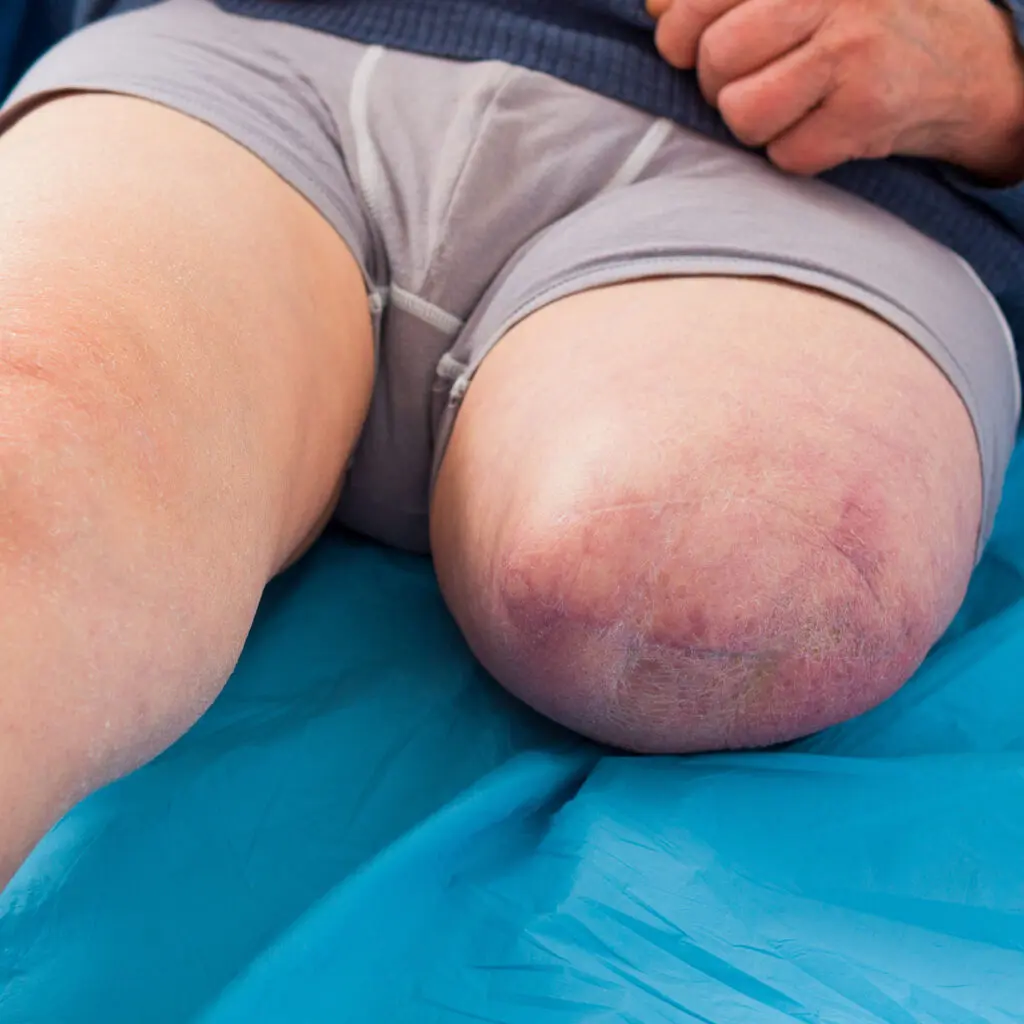
Early intervention by an experienced Vascular Surgeon can stop major limb amputations like the one above

Mr Yow & his team operating in hybrid OT to save a leg
There are 3 very important points to remember :
- You must see a Vascular Surgeon IMMEDIATELY, if you have a leg ulcer or gangrene.
- It is possible to save your leg if you have Vascular intervention early. Any delays can result in lower limb amputation and even life-threatening sepsis.
- The role of a Vascular Surgeon is to save legs.
The UK Vascular Society (VSSGBI) Quality Improvement Framework(QIF) 2022 for Peripheral Arterial Disease(PAD) and UK National Institute for Health & Care Excellence (NICE) guidance state that any patient with a leg ulcer or gangrene should be seen and treated within 2 weeks of diagnosis for non-admitted patients and 5 days for inpatients.
The International Working Group on the Diabetic Foot(IWGDF) guidelines on Peripheral Arterial Disease in patients with Diabetes Mellitus and a Foot Ulcer similarly urge rapid investigation and treatment by a Vascular Surgeon to avoid major limb amputation. The IWGDF involves leading Vascular clinicians from both the American Society for Vascular Surgery(SVS) and the European Society for Vascular Surgery(ESVS).