
Endovascular Aortic Aneurysm Repair (EVAR)
This is the most modern operation where the aortic aneurysm sac is excluded or taken out of the circulation by re-lining the inside of the diseased aorta with an aortic stent-graft. The word ‘endovascular’ implies all repair is done inside the artery without having to open the artery. This is indeed true for our most modern Vascular Surgical development, which is percutaneous-EVAR (PEVAR) where the patient has no open incisions at all and the stent-graft is delivered via small punctures in the groin over guidewires.

Before the procedure, your Vascular Surgeon and his team will make precise measurements of your aorta and the aneurysm including the length and diameter of the relevant arteries and their distance from vital organs such as the kidney. These measurements are taken from your pre-operative CT angiogram. This then allows the team to carefully choose the correctly sized stent-graft and its leg extensions for you.
The stent-graft is then guided to the correct position over guidewires and using X-ray imaging in theatres. (See EVAR deployment video here) The EVAR stent-graft is then deployed by unsheathing it from its delivery system much like the release of a parachute. The EVAR stent-graft, which is made up of clever metal alloys and polyester which remains in position by the outward force of the stent and often hooks at its top-end which cling onto and line the wall of the aorta precisely.
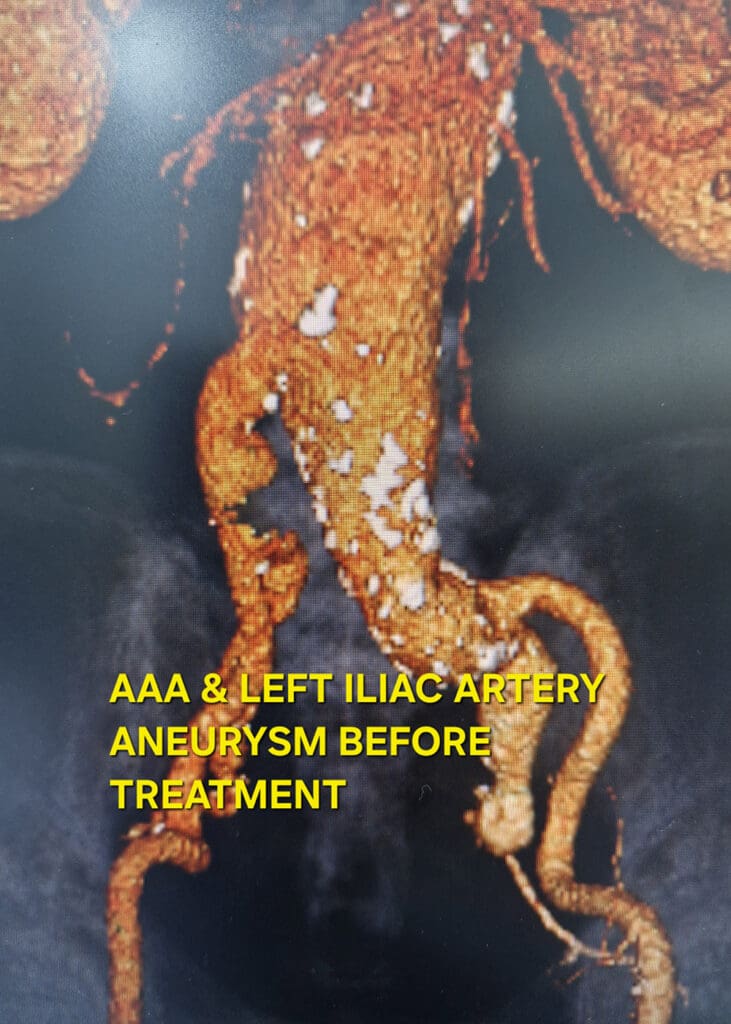
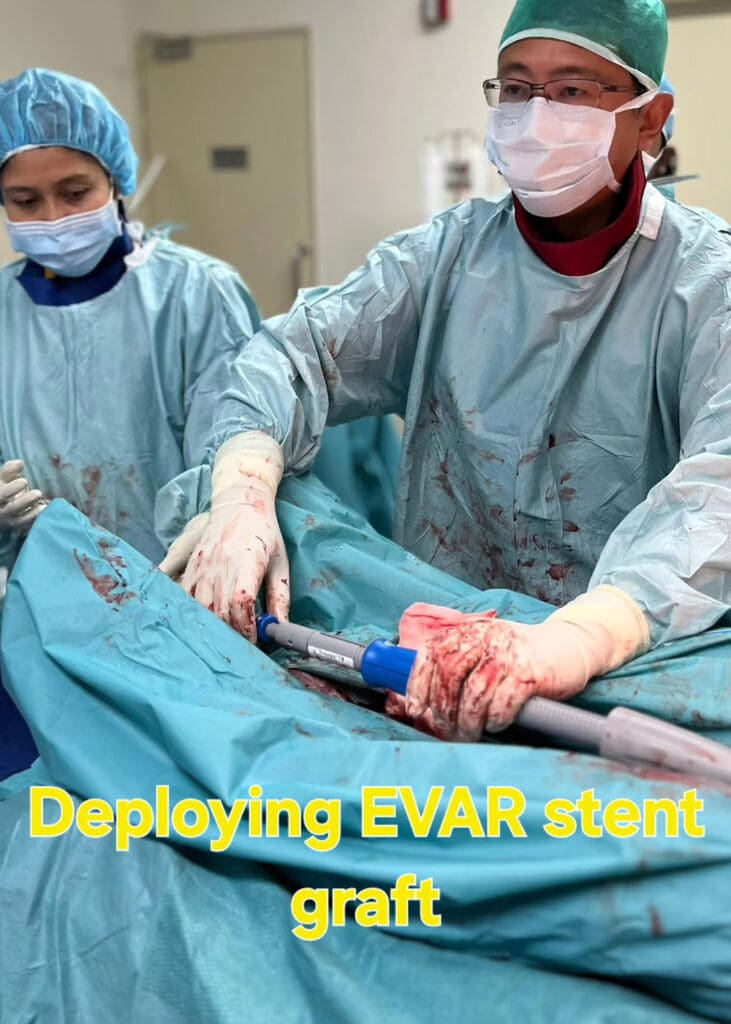
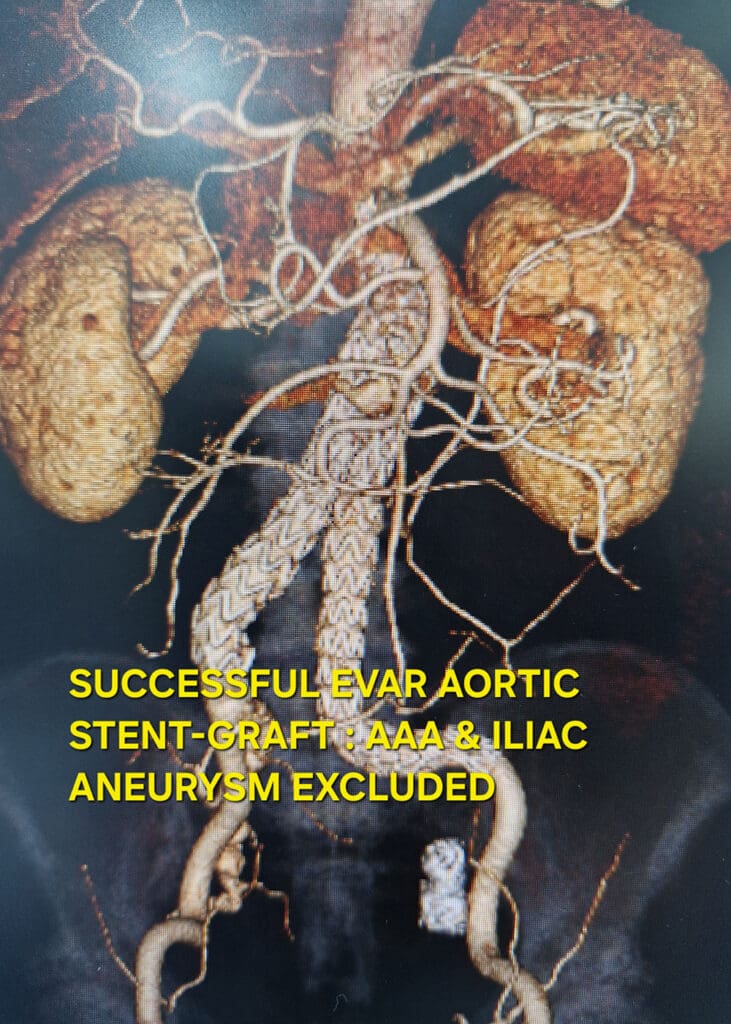
The holes in the artery are then closed remotely using special suture deployment devices. (See how an artery is closed without a surgical incision here : Proglide deployment video) making this a totally keyhole procedure.
As this procedure involves tiny cuts with very little blood loss, there is much less general upset to the patient’s heart, lungs and general physiology, EVAR is very useful for frail and more elderly patients.
On average, patients stay in hospital for 1 to 2 days.
The operative mortality for EVAR from major trials is 1.7%. However, all patients will require lifelong scanning surveillance (CT and ultrasound) of their stent-graft due to the potential for the stent to migrate, bend, block or for leaks to form between the wall of the aneurysm and the stent(endoleaks). As there is use of contrast, there is the small risk of kidney problems after the procedure. These complications may be reduced by careful planning, training and experience of your Vascular Surgeon. Hence, the great benefit of the EVAR procedure is the lower upfront risk of death compared to open repair.
Open Repair
This involves making a large incision in the abdomen and a clamp placed across the neck above and below the AAA sac. The sac is then opened and a prosthetic graft (Dacron which is a special polyester material) is sutured to the healthy aorta above and below the sac to replace the diseased area of aorta. This then takes away the patient’s risk of rupture and death.
The clamps are then removed to restore flow to the legs. The sac and the abdomen are then closed over the repair and the patient returns to the Intensive Therapy Unit to recover. On average, most patients stay in hospital for about 7 to 10 days.
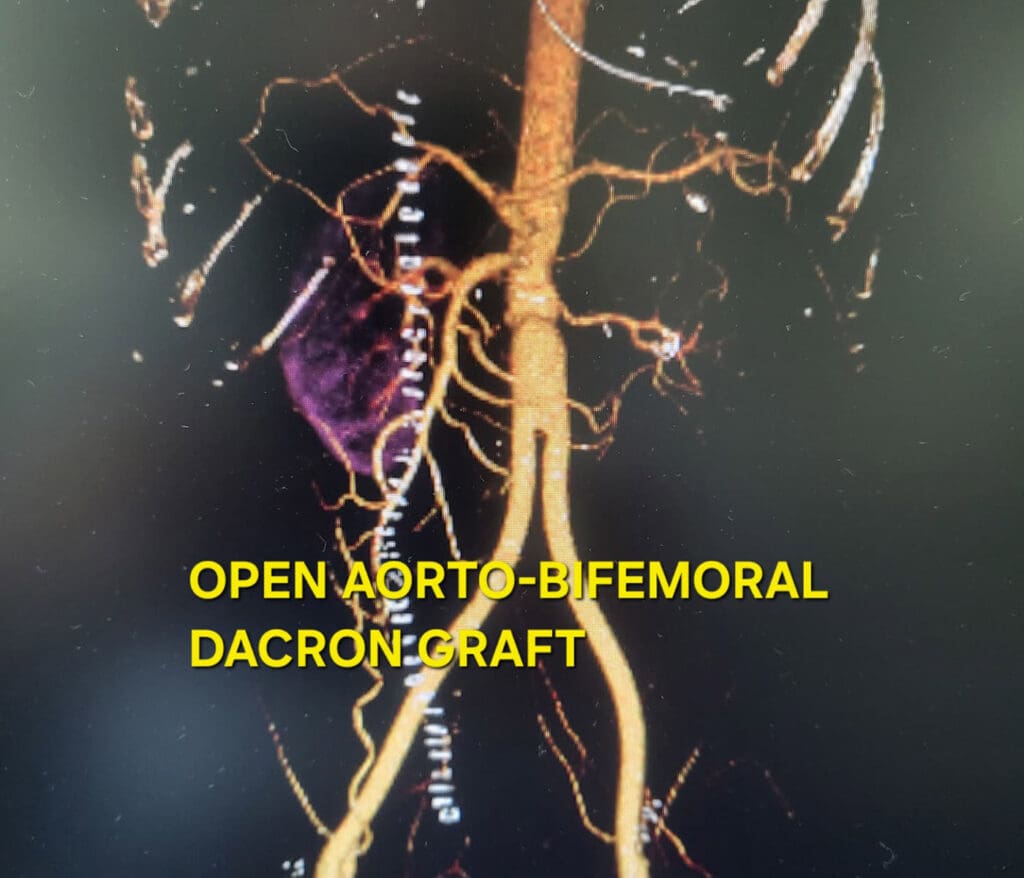
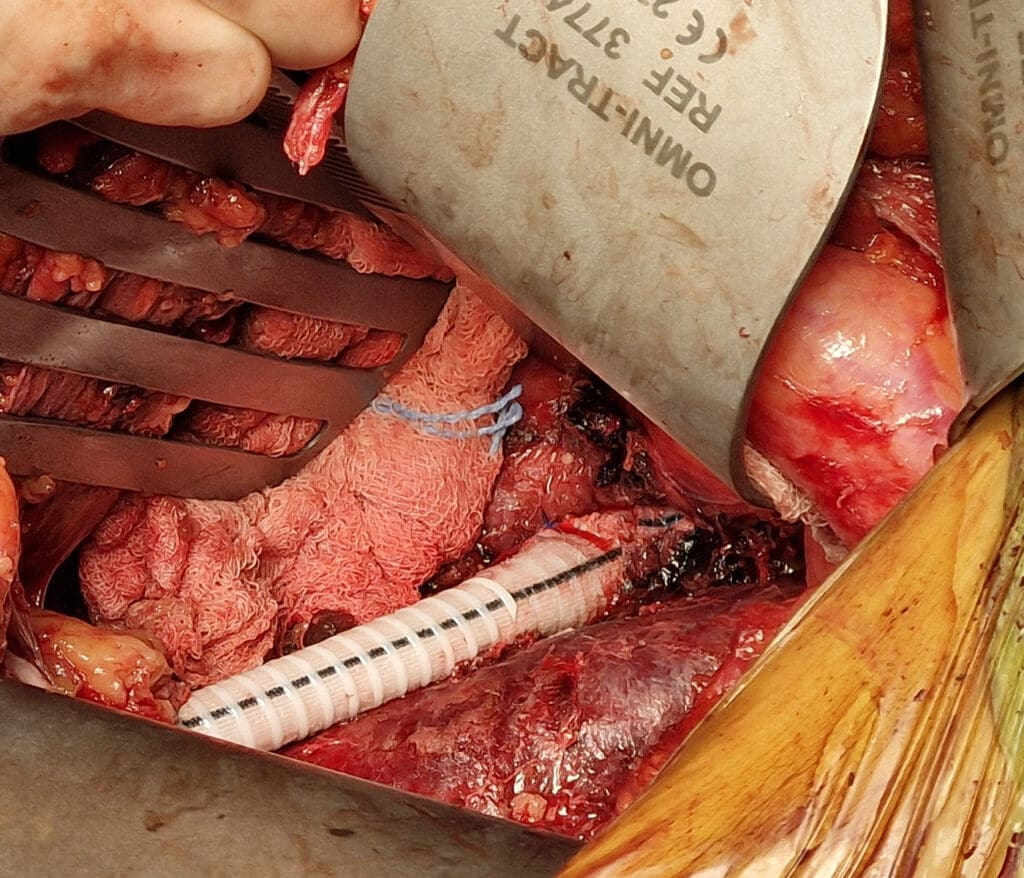
A planned open repair carries a significant operative mortality (4.7% in the first 30 days of surgery. See EVAR-1 trial results here) and complications such as heart, chest and kidney problems, wound separation/infection, bowel injury due to loss of bowel vessels , impotence and clots in the legs. This is because it is a major open operation with significant upset to the whole patient’s physiology. However, it is an established and very effective repair for younger, fitter patients and has very good results for all patients in the right hands. Your Vascular Surgeon will assess you very carefully with pre-operative tests to ensure that you are well enough to undergo an open repair.
It is important to remember that a planned open repair has vastly better outcomes compared to emergency repair of a ruptured AAA. Patients undergoing a planned open repair are 4 times more likely to survive compared to a repair in an emergency setting.
To read in detail the Clinical Practice Guidelines on Treatment of Aortic and Iliac Aneurysms, click here for the UK NHS National Institute of Health & Care Excellence(NICE) and the European Society for Vascular Surgery guidelines.