Where Can I Get Treatment?
Here at Sri Kota Specialist Medical Centre in Klang, we practice high-quality, evidence-based treatment of varicose veins and venous ulcers.
The treatments recommended and used in my practice have been assessed and recommended by the National Institute of Clinical Care Excellence (NICE) in the UK. All treatments below are routinely used in NHS government hospitals in the UK and in Kementerian Kesihatan Malaysia(KKM) as well as University hospitals in Malaysia. Their use has been evaluated and validated in multiple randomised controlled trials and published in peer-reviewed journals such as the Lancet and British Medical Journal(BMJ).
Read NICE UK guidelines on varicose veins and treatment here.
Read European Society for Vascular Surgery(ESVS) guidelines here.
Treatment
I: Minimally invasive/Endovascular
Endothermal (ET) methods : Endothermal methods are the first choice treatment recommended by NICE UK.
Radiofrequency ablation (RFA)

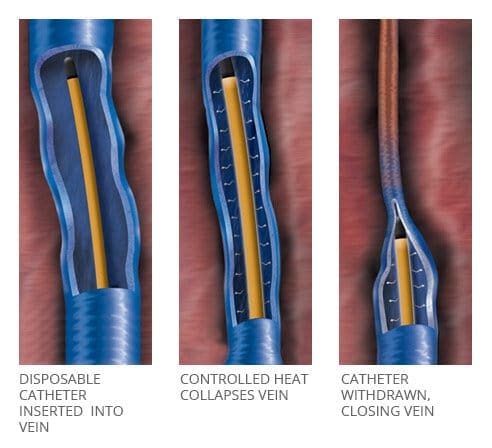
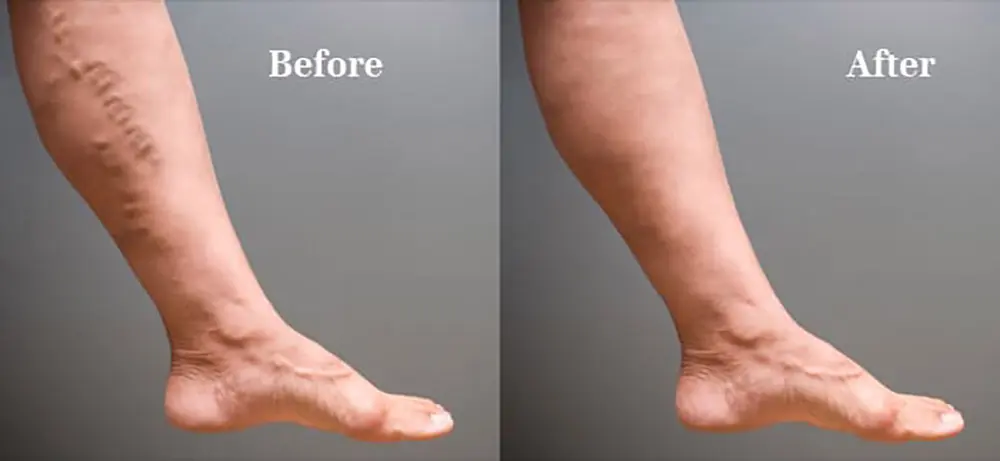
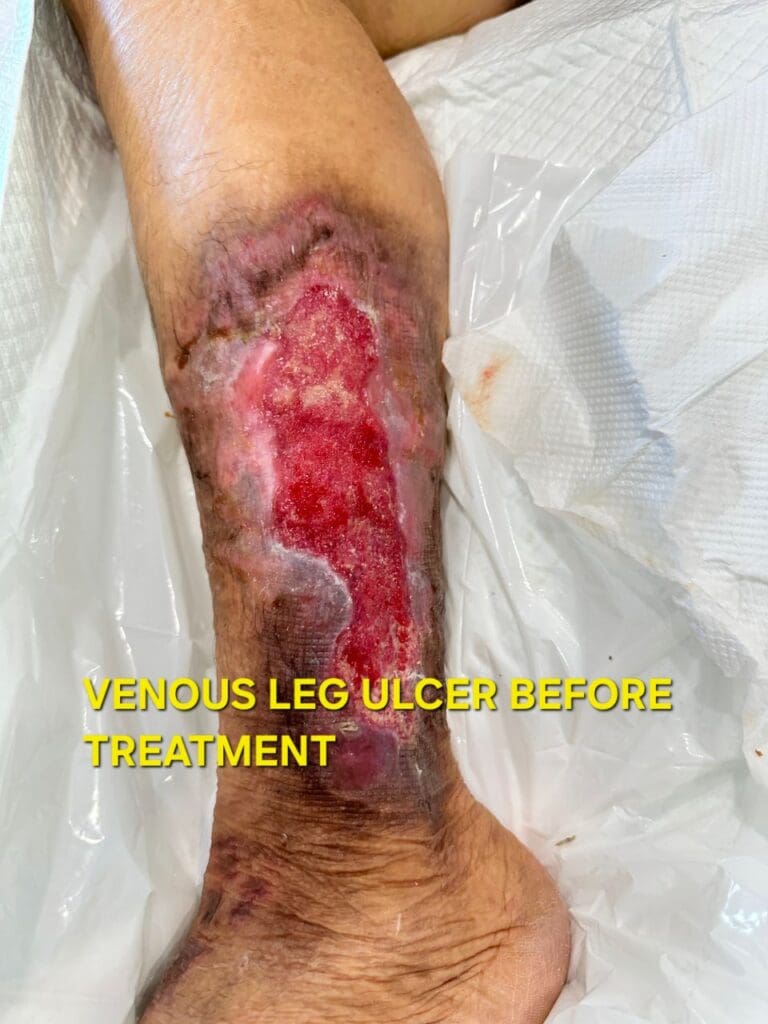
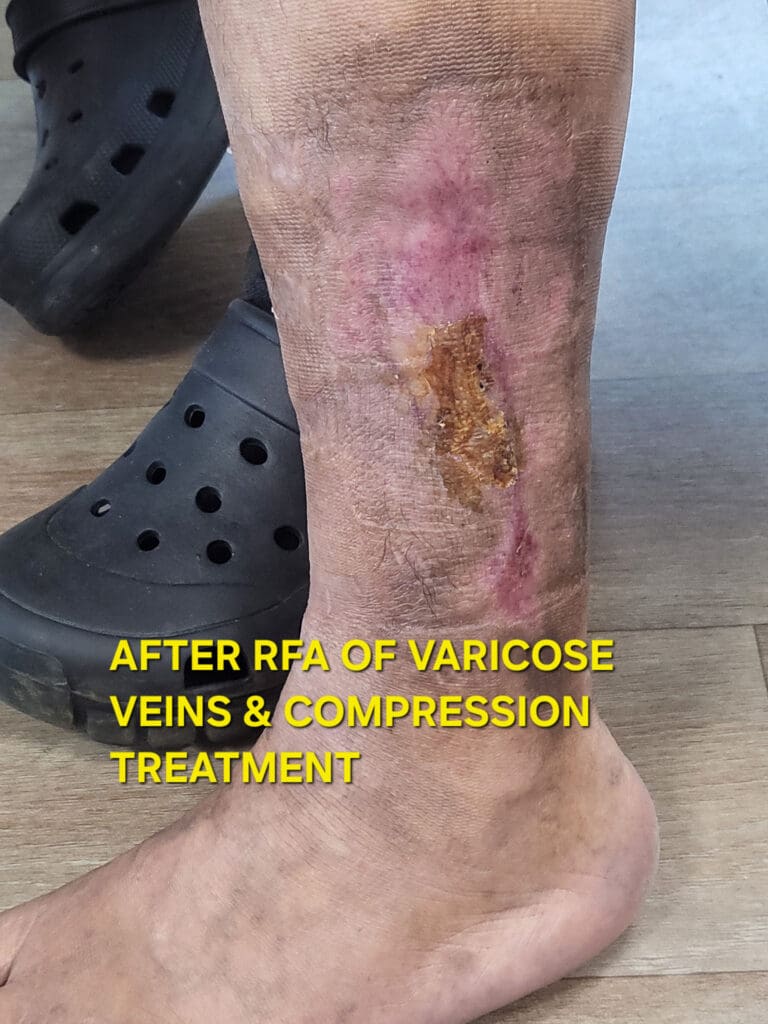
This involves putting a small catheter(tube) with a temperature probe and electronic device which produces microwaves inside your varicose veins. This will all be done with local anaesthetic injections and avoids a general anaesthetic. The RFA catheter is then pulled back gradually to heat the insides of the veins. The gentle heating effect at 120 deg C causes the vein to collapse and stick together (ablation). By closing off the varicose veins, there is no further backflow (reflux) of blood to your feet which reduces your risk of ulcers or further skin damage by CVH. Patients with venous ulcers often see dramatic healing within a few weeks.
RFA is reported in the literature as having success(occlusion) rates of over 93%.
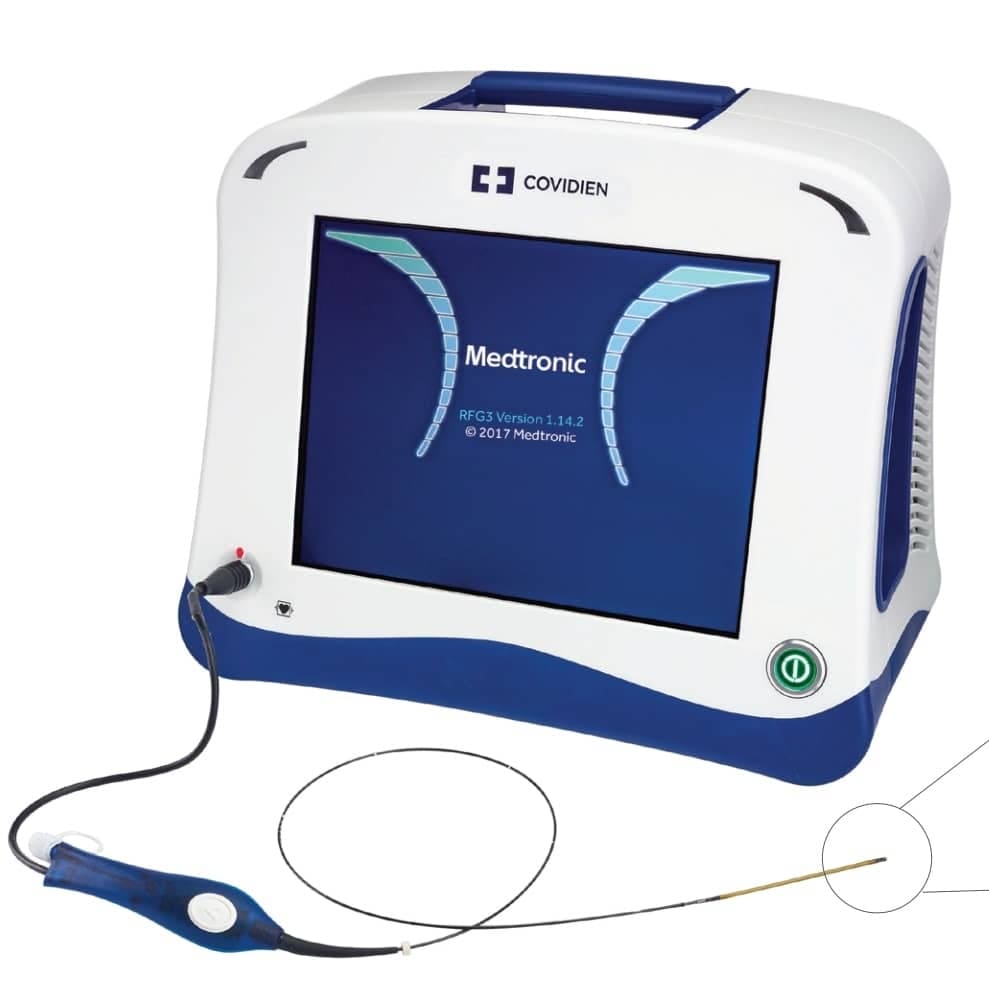
We use the Medtronic VNUS Closure™ system which has a well-established safety and efficacy track record around the world.
Laser (Endovenous Laser Ablation : EVLA)
This applies the same principle. A medical grade laser is used instead of microwave. However, it generates a much higher temperature of over 1000 deg C. In some randomised trials, patients have reported that this procedure is more painful compared to RFA. The patient and staff also have to wear eye protection to protect against inadvertent eye damage from the laser.
Foam sclerotherapy
Generally, this method is used for recurrent or residual varicose veins rather than first line treatment. It involves mixing a sclerosant(irritant chemical) with air to create a foam mixture which is then injected into the varicose veins with fine intravenous (butterfly) cannulae.
The irritation to the lining of the vein again causes it to stick together and collapse. It can cause an ugly brown discolouration of the skin which is usually temporary. Foam sclerotherapy also has a higher recurrence (treatment failure/re-opening of varicose veins) rate than ET methods.
Other endovascular methods
There are some new methods such as Mechanical & Chemical Ablation (MOCA) which involves damaging the vein lining with a brush device along with injection of a sclerosant chemical to cause blockage. Another method involves injection of superglue(cyanoacrylate, the same chemical used in household adhesives). Both methods (called Clarivein & Venaseal) have a shorter period of trial data than ET methods and are more expensive. They also have lower closure rates compared to endothermal methods (about 80%).
Neither techniques are currently endorsed by NICE in the UK.
II: Open surgery : Ligation, stripping of varicose veins and avulsions
This used to be the established way of treating varicose veins until minimally invasive/endovenous techniques were developed. Open surgery is still a very effective way of treating varicose veins. Open surgery involves making a small incision in the groin or back of the knee to isolate the junction where the long or short saphenous varicose vein meets the deep system. The junction is then tied off and the diseased varicose vein is then stripped from the leg using a clever vein stripper. The remaining branches or tributaries of varicose veins are then removed(avulsions/phlebectomies) with a vein hook through tiny punctures.
This procedure is still used if the varicose veins are too twisted to allow an RFA catheter to pass or if the patient does not like foam injections. However, it usually requires a general anaesthetic and the recovery time is longer (1 week versus same day for RFA).
I use this technique if the patient’s veins are too tortuous(twisted) to allow the passage of the RFA catheter.
III: Compression stockings/bandaging
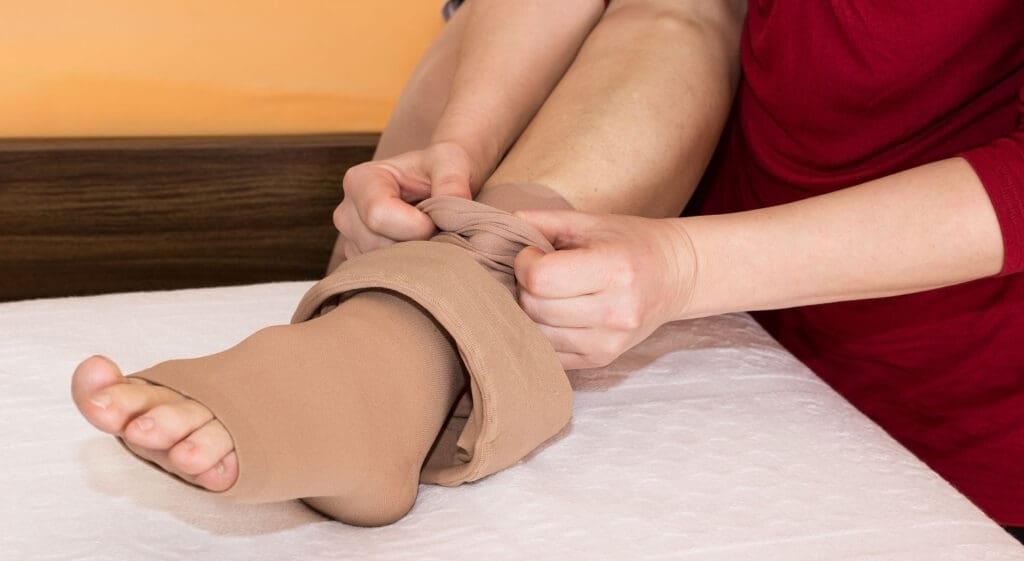
Compression stockings involve use of stockings which have graded tightness (most tight at the ankle and gradually less tight towards the thigh) to force the blood from the ankle towards the groin and then the heart. It is used in frail patients who cannot tolerate even endovenous interventions. However, the tight stockings can be quite difficult to put on without a helper and the common complaint is that they are too hot for Malaysian weather.
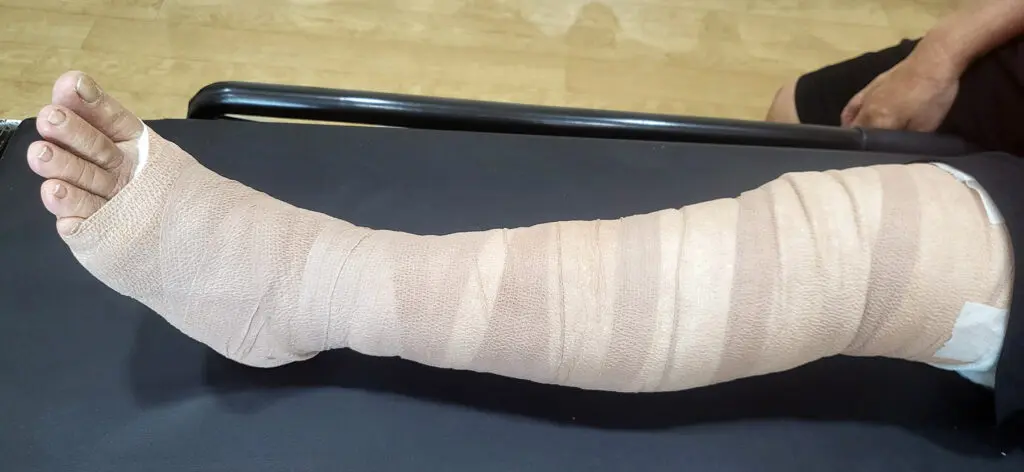
Compression bandaging is used to treat patients with active venous ulcers. The principles are the same for stockings and we often use them together with RFA to achieve faster ulcer healing(See above).
How safe are varicose vein treatments?
Generally all varicose veins interventions are very safe procedures, in particular endothermal or minimally invasive methods which involve very little blood loss or interference with patient physiology. Many patients on blood thinners (aspirin, clopidogrel, anticoagulants) can have the procedure without having to stop them.
In the literature, there is a very small incidence of clots in the deep veins or potentially lungs(deep vein thrombosis : DVT or pulmonary embolus : PE), nerve injury, infection and bleeding. The incidence of DVT/PE is very low and is higher in obese patients or those with clotting risks. These patients may be given a blood thinning injection called Clexane to reduce their risk. The risk of DVT/PE is even lower with RFA or ET procedures as patients start to walk around on the same day.
To reduce the risks above, all of my patients are given compression stockings to wear for 2 weeks after RFA treatment.
Thread or Spider veins : Do I need treatment?
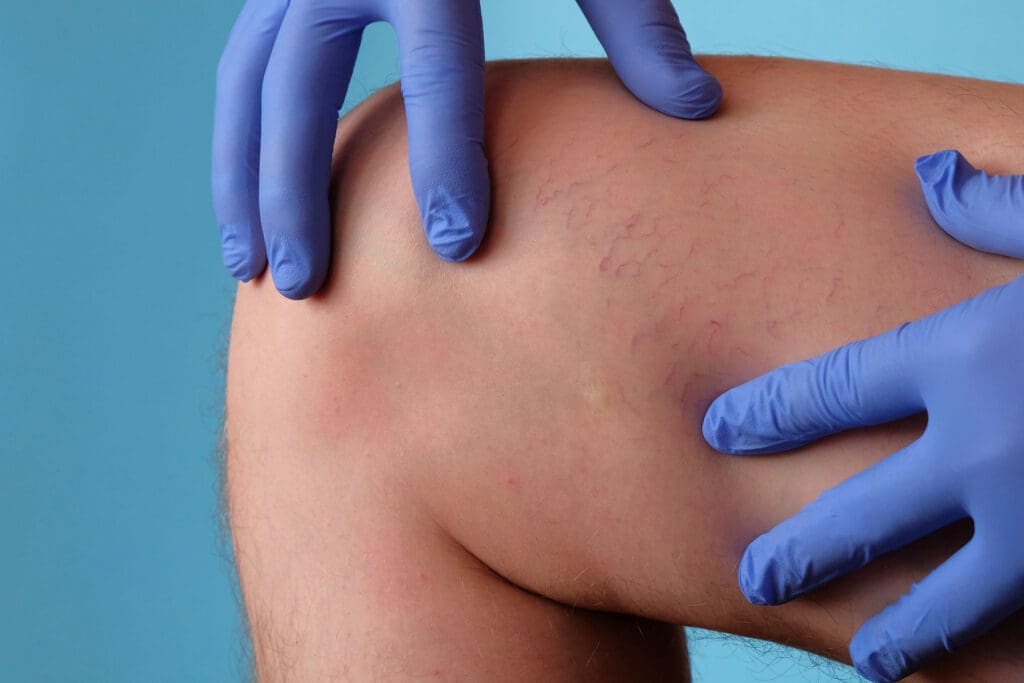
Generally, thread or spider veins do not cause skin damage associated with CVH. Although considered unsightly by some, most spider or thread veins do not need treatment. They are treated with foam injections by some cosmetic skin clinics. I do not treat spider/thread veins in my practice as there is a small risk of skin staining which then defeats the purpose of treating them for cosmetic reasons.
In the UK National Health Service and Malaysian government hospitals, treatment of spider/thread veins is neither recommended nor funded.

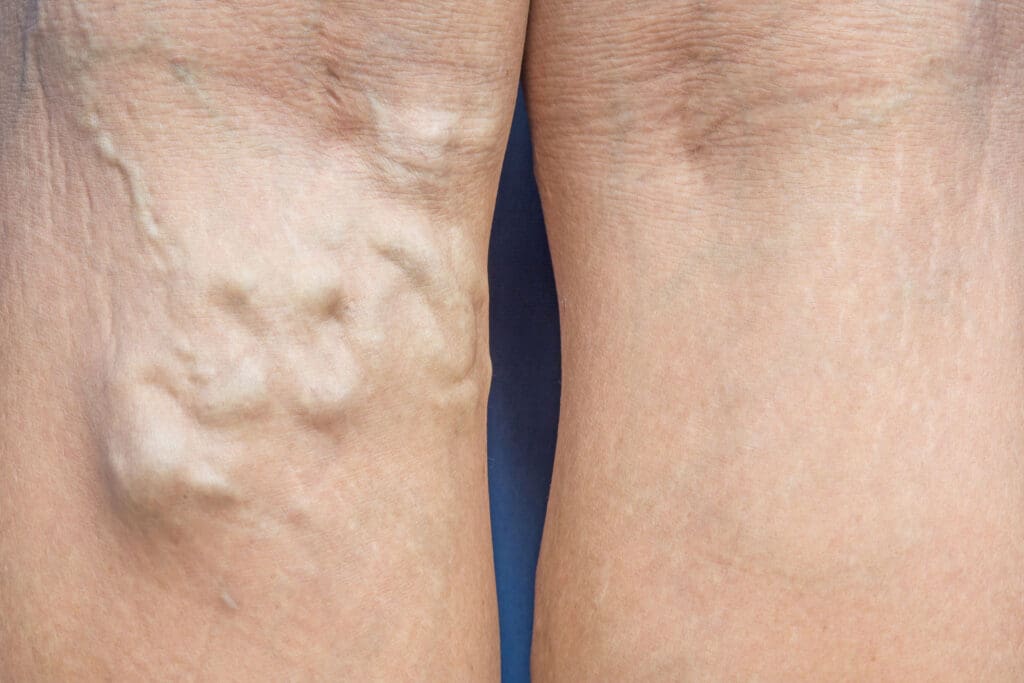
Do not need treatment Needs treatment