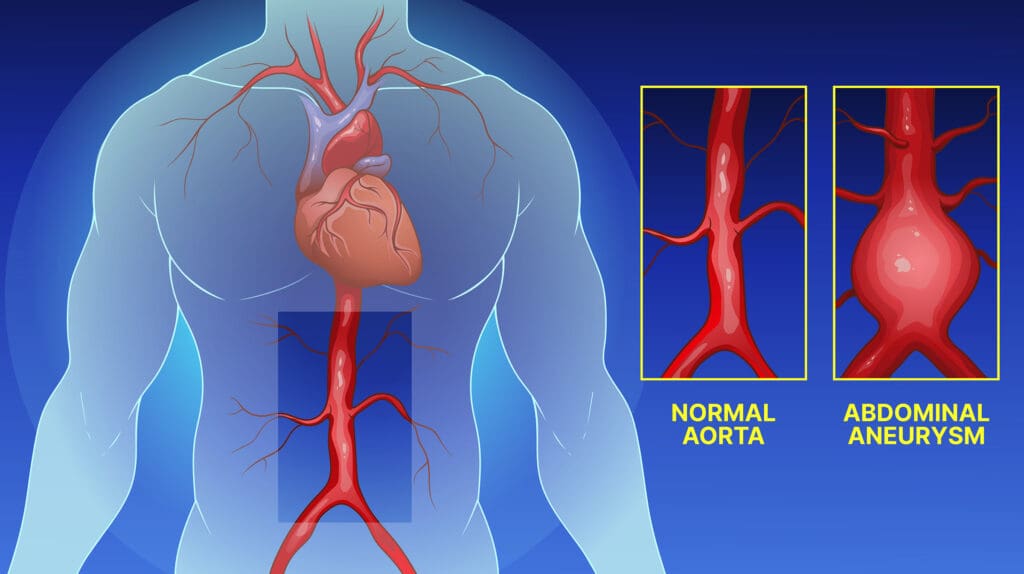
If you are thin, you may feel a lump above your belly button which is pulsatile. Otherwise, you may not feel anything as the aorta is located deep in your abdomen.
If you have a AAA that ruptures, you or a loved one may notice :
- Sudden severe pain in the middle of your abdomen or back
- The feeling of fainting or actual fainting
- Looking suddenly very pale or grey
If you or a loved one experience such symptoms, call 999 or ask someone you trust to drive you to the nearest large hospital with a Vascular Surgeon.

FAQ : If I have an abdominal aortic aneurysm, can I get aneurysms elsewhere?
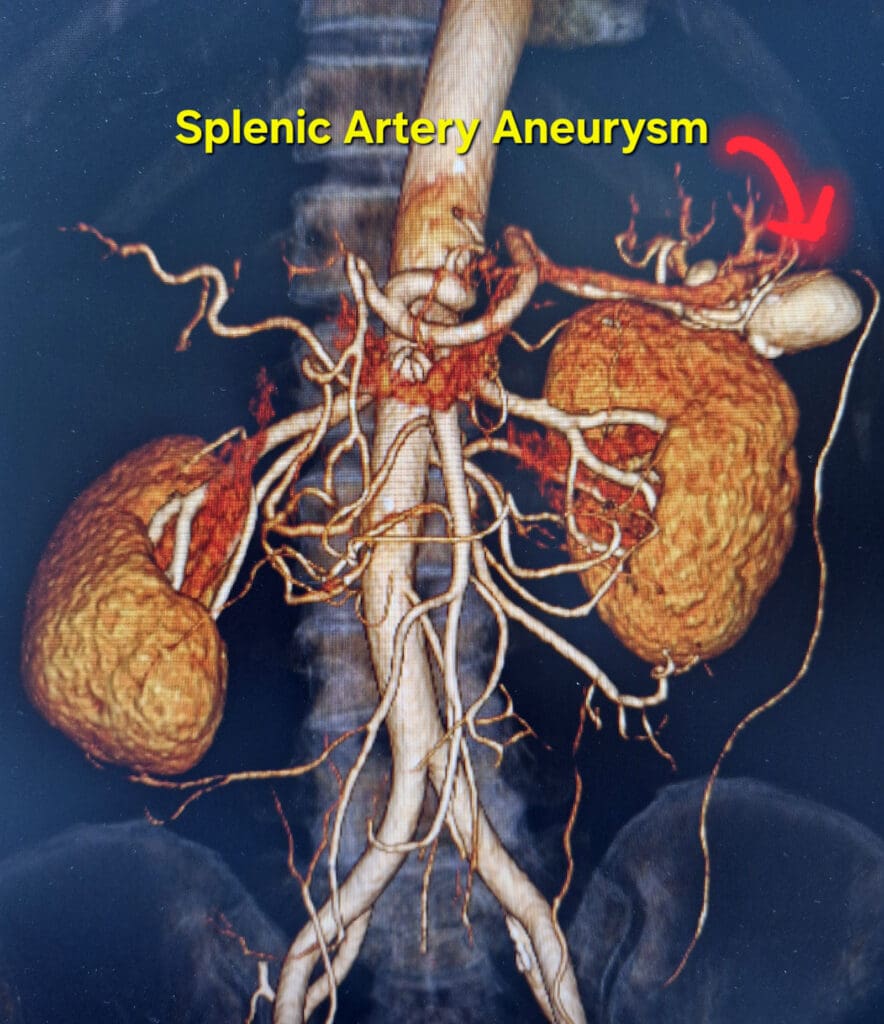
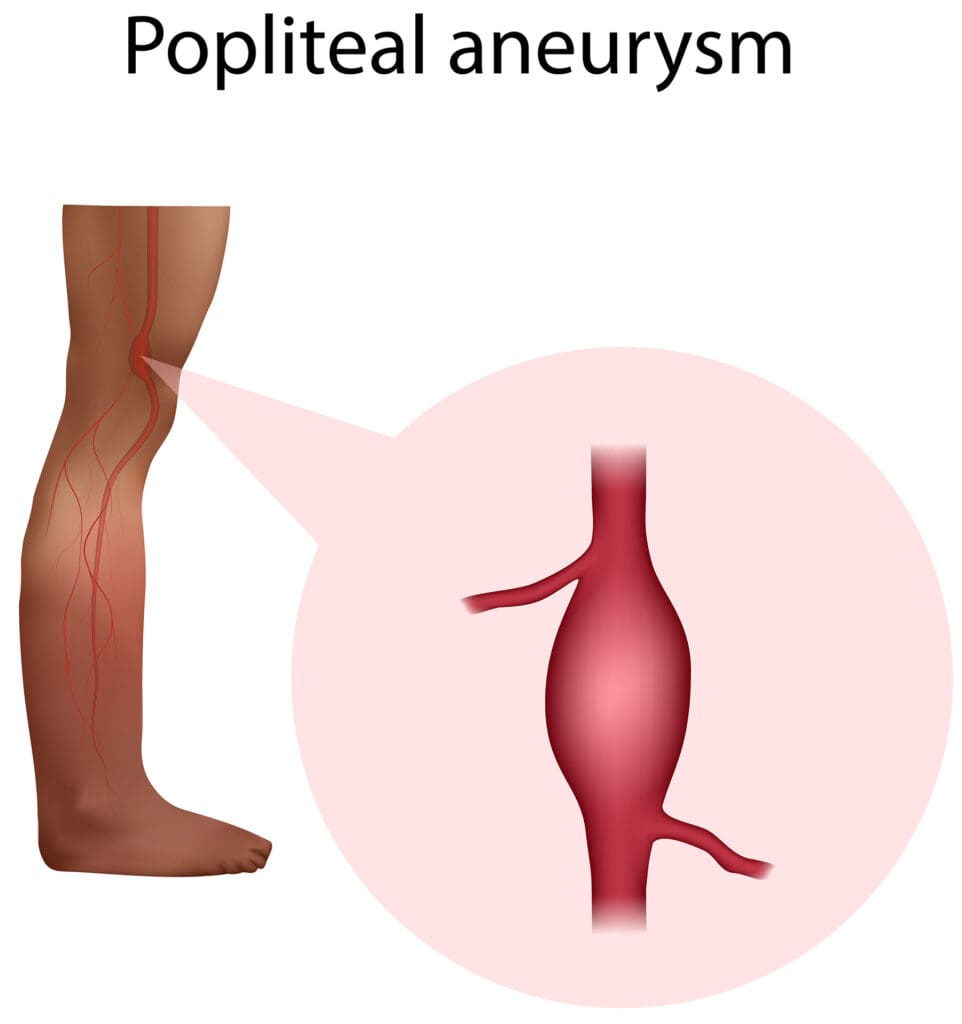
As the tendency to form aneurysms affects the entire body (systemic/body-wide), you can get aneurysms of your arteries behind the knee (popliteal), in your pelvis (iliacs), in your groin (femorals) or the arteries of your abdominal organs (eg splenic artery aneurysm).
A popliteal aneurysm is present in 25% of AAA patients. Popliteal aneurysms are often silent as well. Unlike AAAs, popliteal aneurysms do not generally rupture due to the confined space behind the knee but are a major cause of limb loss if they block(occlusion) or throw off clots(embolization). Aneurysm sacs tend to fill with clots as they enlarge. This increases the risk of occlusion or embolization. When you are assessed for a AAA, the Vascular Surgeon will also check for the presence of other aneurysms in your circulation.